
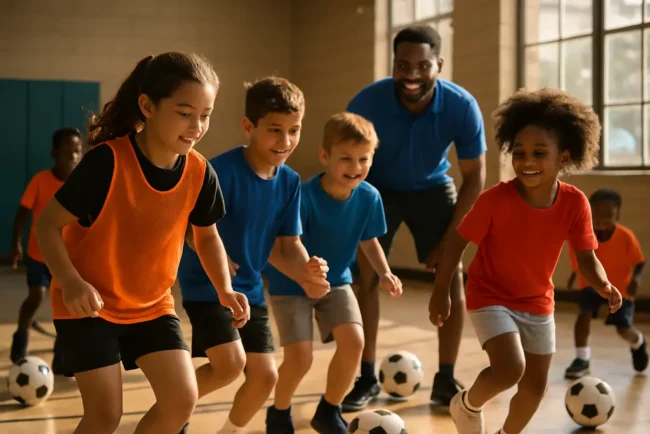
Ravens Youth Grants entered their 16th year in 2026 with a clear community football purpose: reducing equipment barriers for youth and high school programs while tying safety, participation, and local club capacity into one activation model. The Baltimore Ravens and Under Armour have framed the program around practical items that matter to coaches and parents, including jerseys, cleats, sports bras for girls, Guardian Caps, rehydration and heat-safety kits, and field equipment through the Ravens RISE outreach platform.
Why Ravens Youth Grants Matter In Maryland
The 2026 cycle was not an open-ended campaign. The application window opened on March 3, 2026, and closed on April 11, 2026, according to the official Ravens grant page. That timing matters for club administrators because it placed the selection process before summer football activity and before the August 2026 equipment distribution period connected to Ravens Training Camp.
On August 4, 2026, the Ravens announced that 24 nonprofit youth and high school sports programs received grants. The awards served more than 4,200 young athletes across more than 300 youth football and sports teams. The recipient footprint covered 13 Maryland counties, including Baltimore City and Baltimore County, Anne Arundel, Frederick, and Prince George’s, along with Milford, Delaware. For a grant program tied to an NFL club, that distribution shows a regional approach rather than a single-city campaign.
Ravens Youth Grants As A Safety Signal
The inclusion of Guardian Caps is one of the more notable football-specific details. The research identifies them as soft-shell helmet covers designed to reduce head impact. That does not remove the need for certified coaching, tackling instruction, medical protocols, or heat policy, but it does show that the grant package is not limited to uniforms. It reaches into the risk-management area that many local clubs struggle to fund consistently.
The heat-safety component also deserves attention. Youth football practices often begin during warm late-summer conditions, and volunteer-led clubs can vary in how they plan hydration stations, cooling breaks, and emergency response. By including rehydration and heat-safety kits, the program points coaches toward preparation rather than reaction. That is a practical form of activation because it can influence weekly practice habits, not just opening-day presentation.
What The 2026 Package Changed
Grant programs are often judged by the number of jerseys delivered, but the 2026 package was broader than apparel. New Under Armour jerseys and cleats remain central because they reduce direct costs for families and clubs. Yet the inclusion of girls’ sports bras and options for flag football starter kits signaled a stronger focus on female participation. That shift is relevant because girls’ flag football has gained attention across school and youth settings, and equipment packages can either support that growth or leave it dependent on uneven local fundraising.
Female Participation And Flag Football
For a coach or club manager, the female-sports element changes planning. A program that receives suitable apparel and starter equipment can organize a flag football pathway with fewer first-season barriers. The research does not provide participation splits by gender for the 2026 award group, so it would be unsafe to claim a measured participation outcome. What can be said is narrower and still meaningful: the grant design recognized that youth football development is no longer only an 11-player tackle football conversation.
That is where Ravens Youth Grants fit a wider grassroots development model. The best community programs do not treat access, safety, and retention as separate subjects. If a young athlete has usable equipment, a coach has clearer practice resources, and a club has a pathway for girls as well as boys, the program is better positioned to keep athletes involved. The grants cannot solve every local challenge, but they can remove several early obstacles at once.
Partnership Strategy And Local Club Management
The Ravens and Under Armour extended their partnership on August 25, 2026, through a 10-year agreement that included continued investment in youth football initiatives, high school uniform and equipment donations, 7-on-7 camps and tournaments, and the “Play Like a Raven” Clinic, as stated in Under Armour’s partnership announcement. From a club-management angle, the length of that agreement is important because youth development benefits from repeated programming. A one-off donation helps a season; a multi-year structure can influence how organizations plan rosters, clinics, volunteer roles, and equipment replacement.
Ravens RISE also gives the grant program a wider football context. The outreach platform includes 7-on-7 tournaments, “Play Like a Raven” clinics, Coach of the Week recognition, and the Ravens High School Football Showdown. Those pieces matter because equipment alone does not build a player pathway. Athletes need coaching, competition formats, visible recognition, and safe practice environments. For community clubs, the challenge is turning outside support into a repeatable operating plan.
A Club Manager’s View Of The Grant Window
For local administrators, the 2026 timeline suggests three practical lessons. First, documentation has to be ready before spring, not after summer sign-ups. Second, programs should connect grant requests to participation needs, safety needs, and equipment gaps rather than treating the process as a general wish list. Third, award recipients need a distribution plan so gear reaches athletes before the period when retention decisions are often made by families.
- Access: Jerseys, cleats, and field equipment can reduce direct cost pressure on families and nonprofit programs.
- Safety: Guardian Caps and heat-safety kits place risk planning inside the equipment conversation.
- Participation: Sports bras and flag football starter kits support a broader youth football base.
- Continuity: Tying grants to Ravens RISE activities connects equipment with clinics, tournaments, and recognition.
That framework is also relevant beyond football. Maryland youth sports investment often sits at the intersection of facility access, coaching support, and regional participation. A related facilities discussion can be seen in the site’s analysis of Ripken Stadium investment, where public spending and youth sports capacity are examined through a local development lens. Equipment grants and venue investments are different tools, but both affect whether young athletes have organized places to train and compete.
For in-depth coverage on how to manage sports equipment challenges effectively, Triplet Power Sports offers insights into safe, usable gear and how programs can manage it responsibly. The shared thread is practical: sports participation depends on safe, usable gear and programs that can manage it responsibly.
Ravens Youth Grants And Under Armour Activation
The strength of Ravens Youth Grants is that the program links brand partnership with needs that local coaches can identify quickly: uniforms, cleats, protective-support items, hydration supplies, and field equipment. The risk is that public discussion can overstate what any grant can do. A grant can improve access and readiness, but it does not automatically create trained coaches, stable transportation, academic support, or long-term athlete retention.
That is why the 2026 activation should be evaluated with caution and clear measures. The reported reach of more than 4,200 young athletes and more than 300 teams is significant, but future assessment would be stronger if paired with retention data, coach development outcomes, injury-prevention education uptake, and participation growth in girls’ flag football. Those measures would help separate visible equipment delivery from sustained grassroots impact.
As of August 27, 2026, the supported facts show a program with defined dates, named equipment categories, a broad Maryland footprint, and a new 10-year partnership commitment between the Ravens and Under Armour. For youth football, that combination is meaningful because the most durable community programs are built through repeated contact: gear in hand, coaches supported, clinics scheduled, and young athletes given a clearer reason to return.