
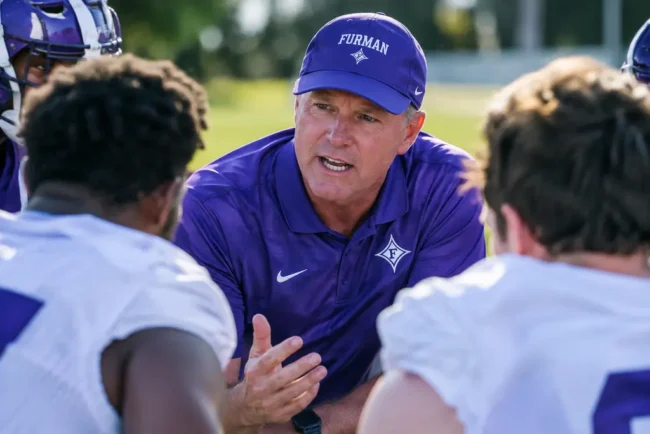
Furman named Cody Worley its head football coach on November 18, 2026, bringing back a former Paladins quarterback who had spent seven seasons on staff at Army West Point. The hire gave Furman a successor to Clay Hendrix and brought in a coordinator whose Army teams ran the ball at unusually high rates of production. That record offers a useful starting point for assessing the hire, not a playbook for Furman. The more immediate questions concern how the staff handoff is organized and how the new coaches fit their offense to the players already in the program.
Cody Worley and the Furman Handoff
FootballScoop reported on November 17, 2026, that Furman was targeting Worley and that Hendrix had announced on October 26, 2026, that he would conclude his coaching career with Furman at the end of the 2026 season. The university made the appointment official the following day. The distinction matters: November 18 established who would lead the Paladins, but the appointment date alone did not establish when every football responsibility would change hands. The announcement was a milestone in the transition, not a record of its completion.
As of November 24, 2026, Worley was expected to remain with Army through its season, including the Army–Navy game scheduled for December 12, 2026, before fully taking up his Furman duties. That was the reported plan, not a completed handoff. For players and recruits, the practical question was who could answer questions about roles, recruiting and staff assignments while the two jobs overlapped. The November 18 appointment should not be read as confirmation that Furman had settled those arrangements.
Worley became the 24th head coach in Furman football history. He graduated from the university in 2010 after playing quarterback for the Paladins from 2007 through 2010. As a senior, he passed for 1,496 yards and accounted for 19 touchdowns. Those figures describe his time as a player, not the offense he plans to coach. His return gives alumni and local coaches a familiar connection to the program, but the appointment by itself does not establish any change in alumni support or recruiting reach.
The handoff is best assessed through decisions that players and their coaches can verify. A published staff assignment would tell them who is responsible for a position group, while a named recruiting contact would tell a high school coach where to direct questions. Neither requires Furman to disclose its formations or play calls. Separating those administrative decisions from football decisions also gives supporters a clearer reading of the transition: a staff can clarify responsibilities before it is ready to explain what the offense will look like.
What Army’s Rushing Numbers Showed
What Cody Worley Can Bring From Army
Worley took over as Army’s offensive coordinator and quarterbacks coach in January 2024. In its hiring announcement, Furman noted that Army finished 12–2 in 2024, went 8–0 in American Athletic Conference play and won the league title. The Black Knights defeated Louisiana Tech 27–6 in the Independence Bowl, averaged 300.5 rushing yards per game and led the nation in possession time at 34:39 per game. These are team results from his tenure as coordinator, not isolated measures of his contribution. They establish the standard Army reached without making that standard a forecast for Furman.
Army’s personnel help explain why a direct comparison would be premature. Quarterback Bryson Daily rushed for 1,659 yards and 32 touchdowns in 2024, setting an NCAA record for rushing touchdowns by a quarterback. Army’s offensive line also won the Joe Moore Award that season. Daily’s production shows how much of the scoring burden the quarterback could carry, while the line’s recognition points to the quality of the unit blocking for him. A roster with different strengths could call for a different distribution of carries and different assignments for the quarterback.
The 2025 figures offer a useful check on what rushing yardage can tell readers. Army averaged 324.7 rushing yards per game, up from 300.5 in 2024, yet finished 7–6 after going 12–2 the previous season. That contrast does not establish why the record changed. It does show why rushing output alone would be a poor forecast of what the Paladins might achieve under Cody Worley. For Furman, a stronger test would be whether the run game helps create manageable third downs and whether the offense can stay effective when the score calls for more passing.
Possession time deserves the same care. Army’s 34:39 average tells readers how long it held the ball in 2024, not how many points it earned on any given drive. A long series that ends without points has a different value from one that finishes with a touchdown. If Furman builds around the run, pairing drive length with scoring and short-yardage conversion would give a fuller picture than possession time alone. It would also distinguish an offense that sustains productive drives from one that simply uses more time between its opponent’s possessions.
Roster Fit and Local Player Development
What Local Coaches Can Assess
Army is not Worley’s only relevant stop. He coached at Kennesaw State from 2014 through 2019, working with an FCS program in its early years. During his tenure, the Owls posted three double-digit-win seasons and won multiple Big South titles. That experience shows he has worked in a successful FCS program as well as coordinating an FBS offense at Army. It does not make the two jobs interchangeable: helping build a young program differs from taking over a Furman team that already has players, coaches and established routines.
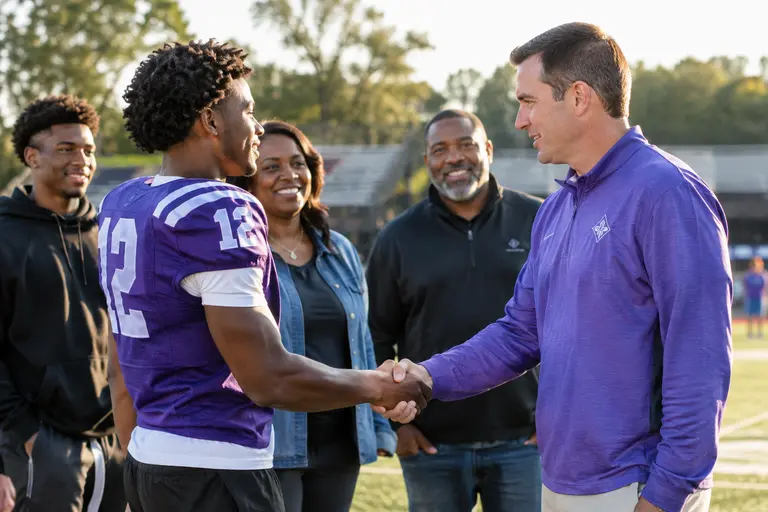
For local high school and youth coaches, the useful part of the hire is not a guess about which formation Furman might use. It is a clearer understanding of how college coaches evaluate skills that players can develop in their own programs. A quarterback’s decision after the snap or a lineman’s footwork on a short-yardage play can be discussed without asking an entire youth team to copy an Army scheme. A conversation about specific assignments would give local coaches more to work with than a broad label such as run-first.
The hire did not establish a new camp, clinic or club partnership. If Furman announces one, practical details such as age eligibility, fees and registration dates would determine whether it is usable for local teams and families. A staff introduction and a session where youth coaches can ask about position development would serve different purposes, even if both were described as outreach. The related network site, Aplevante, is a separate resource providing additional community support options, highlighting their distinction from Furman’s official communications.
How to Judge Furman Football Under Worley
The first meaningful offensive comparison will come once Furman has enough game evidence to separate preferred tactics from responses to the score. A team protecting a lead may run more often than one chasing points, regardless of its base offense. Early-down play choices in close games would offer a cleaner view of how Cody Worley and his staff want to operate. Even then, those choices should be read alongside how well the Paladins execute them, rather than being compared directly with Army’s 300.5 rushing yards per game in 2024.
Development is a separate question from play selection. A productive opening stretch for the starting unit would not reveal how prepared a reserve quarterback is or whether the line can maintain its assignments when the rotation changes. Useful evidence would include whether backs and quarterbacks can handle their responsibilities on passing downs and whether different line combinations can execute the same short-yardage calls. Those details would help explain performance against Southern Conference opponents without attributing every result to the choice to run or pass.
As of November 24, 2026, the appointment had settled the question of Hendrix’s successor. It had not settled how Furman would handle the quarterback’s rushing workload, which staff members would direct player development or what links the program would build with local coaches. Army’s record explains why the run game deserves attention, and Kennesaw State gives the hire a relevant FCS reference point. Furman’s own staff assignments, use of its roster and execution in conference play will provide the evidence for judging whether those experiences carry over.