

The USWNT U-20 roster for the 2026 FIFA U-20 Women’s World Cup offered a clear snapshot of how the U.S. youth pathway is being built across professional, college, and youth international environments. Head coach Vicky Jepson named the 21-player group on August 19, 2026, for the tournament in Poland, which began on September 5 and is scheduled through September 27, 2026, according to U.S. Soccer’s roster announcement.
Because the tournament was already underway by September 10, 2026, the roster should be viewed less as a future projection and more as a live development case study. The official announcement and roster breakdown do not provide match outcomes from Poland, so the analysis here stays with what is supported: roster age bands, prior caps, scoring records at youth level, professional exposure, college representation, and prior Concacaf qualifying links.
What The USWNT U-20 roster Says About Pathways
The most direct development signal is the split between professional and college players. The roster includes eight professionals from the NWSL and 13 college players. That mix matters because it shows that the U.S. U-20 pathway is not being filtered through one route. Players can arrive through early professional minutes, college soccer environments, or a blend of youth national team camps and club development.
Pro And College Balance
The eight professional players indicate that the NWSL has become a meaningful reference point for U-20 selection. At the same time, the 13 college players show that the college game remains a major part of the player development structure. For club managers and community coaches, that balance should reduce the pressure to define one correct pathway too early. A player’s environment must match readiness, minutes, training load, academic fit, and emotional maturity.
The roster composition also creates a practical coaching challenge. Players arriving from professional clubs may be used to different daily demands than players from college programs. That does not automatically create a gap in quality, but it can affect rhythm, recovery habits, pressing cues, and speed of adjustment in a short tournament setting. For a youth national team staff, the task is to create common standards quickly without flattening the strengths that different environments produce.
Age Bands And Eligibility
Eligibility required players to be born on or after January 1, 2006. The selected group includes nine players born in 2006, seven born in 2007, and five born in 2008. That distribution gives the roster a wider age profile than a group built mostly from the oldest eligible class. It also leaves room for longer-term continuity because the five players born in 2008 remain eligible for the 2028 U-20 Women’s World Cup.
The 2008-born group named in the research notes includes Evan O’Steen, Pearl Cecil, Nyanya Touray, Micayla Johnson, and Audrey McKeen. The same notes identify McKeen as the youngest player and Alex Buck as the oldest. From a development lens, this range matters. Younger players who make a U-20 World Cup roster may gain tournament exposure before reaching the end of the cycle, while older eligible players may provide a more advanced physical and tactical baseline.
Caps, Scoring, And Tournament Readiness
All 21 players entered the roster with U-20 caps, and the group had 128 combined U-20 appearances, averaging just over six caps per player. That total gives the staff some shared reference points, though it also shows that many players were not heavily capped at this age level before Poland. Tournament readiness, then, cannot be measured only by total appearances. It also depends on the type of matches, prior youth age-group experience, and the player’s role within the squad.
USWNT U-20 roster Experience Indicators
The USWNT U-20 roster had only three players with double-digit U-20 caps: Emeri Adames with 17, Aven Alvarez with 12, and Katie Scott with 11. That detail is useful because it separates general selection experience from deeper team familiarity. A player with double-digit caps may already understand staff expectations, tournament routines, and the speed of international youth games. A lower-capped player may still be fully capable, but the adjustment window is shorter.
Eight players, or 38 percent of the roster, were part of the 2025 Concacaf Women’s U-20 Championship qualifying team. Five of those players scored in qualifying: Kennedy Fuller, Linda Ullmark, Emma Johnson, Katie Scott, and Sealey Strawn. That gives the staff a group with direct experience in competitive qualification settings, not just friendly matches or training camps. In youth tournaments, prior qualifying exposure can help because the emotional demands of knockout-style or table-pressure games are different from standard development fixtures.
Finishing Signals From Youth Caps
The scoring information in the research notes points to Linda Ullmark as the leading U-20 scorer in the group, with six goals in seven caps, including a hat trick in a 5-0 win over France. That is a strong production marker, though it should be read carefully. Youth international goal totals can be shaped by opponent strength, game state, minutes played, and tactical role. Still, efficient scoring across limited caps is relevant when assessing attacking profiles.
Prior U-17 production also adds context. Micayla Johnson had nine goals in 18 U-17 caps, while Nyanya Touray had eight goals in 13 U-17 caps. Ainsley McCammon, Y-Lan Nguyen, and Katie Scott also had U-17 international exposure. For development staff, this matters because repeated youth national team involvement can suggest that a player has been evaluated across multiple age bands, training cycles, and competitive demands.
Community And Club Development Implications
For grassroots clubs, the lesson is not that every player must turn professional early or chase national team camps. The clearer message is that player development remains layered. A player may need strong local coaching, competitive club matches, regional identification, college structure, or professional training at different points. The 2026 group reflects several routes feeding into one tournament roster.
Lessons For Local Clubs
Local clubs can take three practical points from this roster profile:
- Track readiness, not age alone: The roster includes players from three birth years, which shows that selection is not limited to the oldest eligible players.
- Value repeat exposure: Every selected player had U-20 caps before the tournament, so camps and youth matches remain meaningful evaluation points.
- Respect multiple pathways: The pro-college split shows that development can continue in more than one setting when the environment fits the player.
For clubs that serve younger players, the age-band data should encourage patient planning. A 16- or 17-year-old who is not yet physically dominant may still be on a valid path if technical growth, decision-making, and training habits are advancing. For coaches, the challenge is to create match problems that stretch players without rushing them beyond their current capacity.
The professional representation also creates a link to domestic league monitoring. NWSL minutes, squad inclusion, and training environments can shape youth national team readiness, though the official roster notes do not claim a direct selection formula. For related domestic context, our recap of NWSL August matches tracks how league play can frame broader player evaluation conversations.
Player Development Signals Beyond Soccer
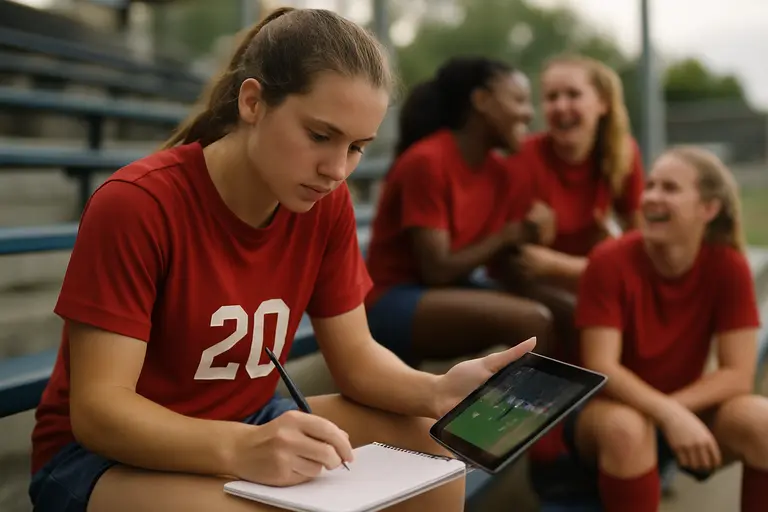
Roster construction in youth soccer can be compared with other team sports because the underlying questions are similar: who is ready now, who has room to grow, and how should coaches balance experience with upside? Basketball analysts often ask those same questions through rotation roles and age curves, and the same network’s related site NBA Playbook offers a useful cross-sport reference point for thinking about how young athletes are placed into competitive roles.
Why Mixed Experience Can Help A Tournament Squad
A group with professionals, college players, older eligible players, and 2008-born players may give a staff different tactical and developmental tools. More experienced players can help stabilize training standards. Younger players can gain tournament exposure that may carry into future cycles. The key is that selection data alone cannot prove how the group will perform in Poland, but it can show the kind of development bets being made.
This is where coaching communication becomes central. A player with 17 U-20 caps and a player with fewer caps may need different feedback rhythms. A college player may be moving from one competitive calendar into another. A professional player may already be familiar with higher daily training standards but still face a new international role. The best youth environments usually make those differences visible, then organize them into clear team functions.
USWNT U-20 roster Player Development Spotlight
The USWNT U-20 roster should be read as a development document as much as a tournament selection. It shows a player pool with professional and college ties, complete U-20 cap coverage, several carryovers from Concacaf qualifying, and younger players who may remain part of the next U-20 cycle. None of those facts guarantee tournament results, but they do give coaches and club leaders a grounded way to discuss readiness.
For community programs, the practical takeaway is straightforward: build environments that keep more players improving for longer. The roster evidence supports patience, multi-stage evaluation, and a willingness to let different pathways coexist. That is useful for elite youth soccer, but it is also relevant for local clubs trying to develop players who may not follow the same route at the same speed.