

The 2026 MIAA Soccer Championships produced two first-time boys’ state champions in Newton South and Medfield, with a junior directly involved in multiple goals for each winner. Benji Dias helped turn a deficit into a Division 1 title, while Max Tillmann scored twice and set up another goal in the Division 3 final. The available girls’ Division 1 reporting answered a different question: who stood out before the tournament began, not who decided it. This retrospective keeps those records separate so that a goal in a championship match carries a different evidentiary weight from a regular-season total or a preview mention.
MIAA Soccer Championships: Boys’ Final Standouts
In the Division 1 final on November 21, 2026, Newton South beat Wellesley 2–1 to claim its first state title. Dias, a junior, scored the equalizer two minutes into the second half, then assisted the deciding goal by senior Fabiano Freitas, according to the MIAA boys’ championship recap. Dias had a direct role in both goals, while Freitas supplied the finish that put Newton South ahead. Crediting both contributions distinguishes the work that brought the sides level from the play that settled the final.
Reading the MIAA Soccer Championships Scorelines
Medfield’s first boys’ soccer title came on November 20, 2026, with a 5–2 victory over Pope Francis Preparatory in Division 3. Tillmann directly contributed to three of Medfield’s five goals through his two finishes and one assist. The larger margin makes his contribution different from that of Dias, who was involved in every Newton South goal in a match decided by one. Both juniors delivered as scorers and providers, but the available scoring details do not establish that they played the same tactical role.
| Player and Class | Final and Date | Result | Reported Contribution |
|---|---|---|---|
| Benji Dias, Jr. | Division 1, November 21, 2026 | Newton South 2–1 Wellesley | Equalizer and assist on winner |
| Fabiano Freitas, Sr. | Division 1, November 21, 2026 | Newton South 2–1 Wellesley | Second-half winner |
| Colton Alhart, Sr. | Division 2, November 21, 2026 | Wayland 3–1 Oliver Ames | Two goals in comeback |
| Max Tillmann, Jr. | Division 3, November 20, 2026 | Medfield 5–2 Pope Francis Preparatory | Two goals and an assist |
| William Pomavilla, Sr. | Division 5, November 20, 2026 | Hopedale 2–1 Keefe Technical | Winner midway through second half |
Colton Alhart and William Pomavilla supplied two other examples of second-half scoring with different consequences. Alhart, a senior, scored twice as Wayland came from behind with three second-half goals to beat Oliver Ames 3–1 in Division 2 on November 21, 2026. Pomavilla, also a senior, broke the tie midway through the second half as Hopedale beat Keefe Technical 2–1 in Division 5 on November 20, 2026. Alhart accounted for most of a comeback; Pomavilla supplied the one goal that separated the finalists.
How the Boys’ Title Matches Turned
Newton South and Wayland both reversed deficits in the second half, but the match records tell those stories at different levels of detail. In Division 1, the timing of Dias’s equalizer identifies a turning point just after halftime, and his assist connects him to the winning goal as well. In Division 2, Alhart’s two goals are part of a larger team response: Wayland needed a third scorer or a third scoring play beyond his two finishes to reach 3–1. The score alone does not show whether either team changed its shape or pressing approach at halftime.
Freitas and Pomavilla also illustrate why the label “winning goal” needs context. Freitas completed a comeback that already depended on an equalizer, whereas Pomavilla’s reported contribution was the goal that broke a tie midway through the half. Both finishes decided 2–1 matches, but the final margin does not show how either team protected its lead. A useful match review would start at the go-ahead goal and then examine what followed, rather than infer territorial control or defensive pressure from the result.
At the MIAA Soccer Championships, the two first-title stories also showed why program milestones and player analysis belong on separate lines of the scorecard. Newton South and Medfield each secured a first boys’ state championship, but the reports support different descriptions of how their featured juniors contributed. Dias helped create a lead after scoring with his team behind; Tillmann supplied three direct goal contributions in a match Medfield won by three. Neither account gives a basis for ranking the two players across divisions, since the opponents, match situations and available evidence differ.
Girls’ Division 1 Players in the November 5 Preview
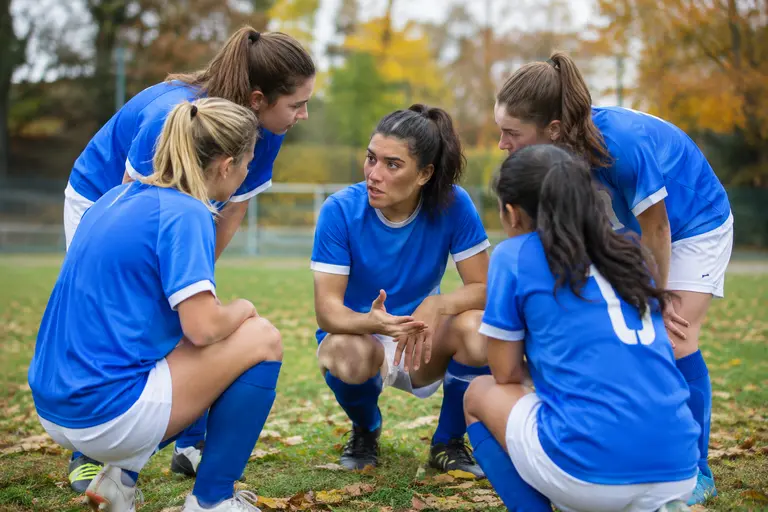
In its November 5, 2026, girls’ tournament preview, The Boston Globe identified Concord-Carlisle junior Emmy O’Donnell and Central Catholic sophomore Sarah Tressler as Division 1 players to follow. O’Donnell entered the bracket with 16 goals and 12 assists for the top-seeded Patriots. Tressler had 28 goals and nine assists in the regular season by the time of the preview. Those figures explain why the players drew attention before kickoff, but they are not playoff totals and do not establish how far either school advanced.
| Player | School and Class | Goals | Assists |
|---|---|---|---|
| Emmy O’Donnell | Concord-Carlisle, Jr. | 16 | 12 |
| Sarah Tressler | Central Catholic, So. | 28 | 9 |
| Izzy Marino | Needham, Sr. | Not supplied | Not supplied |
| Sol Ortiz DeRosa | Lexington, Sr. | Not supplied | Not supplied |
What the Preview Numbers Can Show
Tressler had the higher reported goal total, while O’Donnell had more reported assists. That distinction is useful because it shows two ways a player can stand out in a tournament preview without assigning either a position or a tactical brief. The records do not supply minutes, match counts or a breakdown by opponent, so the totals cannot tell a coach which player was more productive per match or how those contributions were distributed. Concord-Carlisle’s No. 1 seed described the team’s bracket position, not an individual ranking for O’Donnell.
The preview also singled out Needham senior Izzy Marino and Lexington senior Sol Ortiz DeRosa as players to follow in the early rounds. Their inclusion establishes that they were on the Division 1 watch list, but the available notes do not give goal or assist totals for either player. That absence is not evidence of lower production, just as a preseason or pre-bracket mention is not evidence of a decisive playoff performance. Match reports or official postseason records would be needed to assess what either senior did after the bracket opened.
What the 2026 MIAA Finals Offer Local Clubs
The fall 2026 tournament field included 201 boys’ teams and 208 girls’ teams, with five divisions on each side. Against that scale, the performances highlighted here are useful case studies rather than a survey of the state’s talent. Local clubs can make a film session more specific by asking younger players to identify what happened before a finish, what made a pass available and what changed after the score. The reported Dias-to-Freitas winner offers a clear starting point: credit the finish, then examine the action that put the scorer in position.
For tournament organizers, a practical lesson is to separate the match record from the calendar. A club can archive an actual match date, its final score and the source of any player credits separately from a provisional schedule, making it easier for coaches and families to review fixtures after the event. Club staff comparing school knockout commitments with their own schedules can also refer to the site’s October youth tournament coverage for a separate look at club fixture planning. Visit the Bass Lake Roadhouse website to explore more on related soccer content within the network.
The strongest youth-development use of the MIAA Soccer Championships is to set an observation task, not to turn a few names into a statewide ranking. A coach using Tillmann’s final could ask players to track both his finishes and the sequence that led to his assist, if footage is available. A coach reviewing the girls’ preview could use the goal and assist totals to frame questions, then check match evidence before drawing conclusions about postseason play. Keeping the date, competition stage and source attached to each performance makes the review fairer to players and more useful to the clubs developing them.