
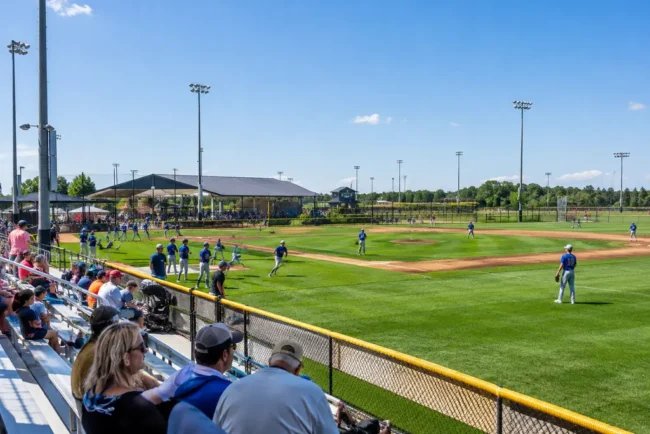
Unrivaled Sports Park reopened in east Las Vegas on November 10, 2026, after a $6 million renovation of the former Big League Dreams Sports Complex. The project rebuilt six baseball fields and repaired the scaled-down replica outfield walls that give the complex its distinctive look. The operator also set out a wider role for the site: space for youth baseball and softball leagues, free community access days and school postseason games, alongside regional and national tournaments. The renovation delivered the space; the schedule and costs will determine how much of it local families can use.
What Changed at Unrivaled Sports Park
The complex originally opened in January 2010 as Big League Dreams, serving youth baseball and softball. Unrivaled Sports acquired the property in January 2025 and initially committed $2 million, according to the operator’s reopening announcement. The reported $6 million renovation was three times that initial commitment, though the figures alone do not establish whether spending exceeded an approved construction budget. The announcement establishes the scale of the investment without breaking out costs by field or by type of improvement.
Field Work at Unrivaled Sports Park
The field work covered all six baseball diamonds, with nearly 980,000 square feet of new AstroTurf installed. Crews repaired or reinforced replica outfield walls and replaced perimeter home run netting. That scope matters to coaches: a field is not just a playing surface, but also a set of boundaries that affect how a game is played and where spectators should stand. The work addressed those parts of the venue together, although the reopening figures measure installed turf rather than changes in field availability or player safety.
FOX5 Vegas reported on November 11, 2026, that the youth-scale outfield walls drew on Fenway Park, Yankee Stadium, Dodger Stadium, Wrigley Field, Angel Stadium and Crosley Field. Repairing the replicas kept an identifiable feature of the old complex while the playing surfaces changed. For a young outfielder, the useful detail is how a ball comes off the wall, not whether the wall reproduces every feature of its big-league counterpart. Readers interested in the ballpark traditions behind the replicas can explore more about baseball history at Books on Baseball, a related site in the same network.
The Las Vegas site was the first venue in the operator’s portfolio to take the new park name. That was a change in identity, not a move to a different site: the diamonds remained within Gary Reese Freedom Park. Mayor Pro Tem Olivia Diaz of Ward 3 described the larger park as a regional outdoor space serving the Las Vegas Valley and said the improvements were intended to benefit residents and visitors. That distinction matters because the complex sits within a public recreation setting, even as its operator markets it as a tournament destination.
What Families Use Beyond the Diamond
Between July and October 2026, work at two Bullpen Restaurant & Tap locations covered approximately 6,000 square feet of restaurant space. The renovations included new flooring and paint, updated countertops and cabinetry, and architectural changes. Those improvements were completed before the November 10 reopening, but the square-footage figure does not establish how many people the restaurants can seat or how quickly they can serve them. For families spending several hours at the complex, the practical question is how service works when several games end close together.
Pedestrian Routes Between Games
The project also included landscaping, work on pedestrian areas, and infrastructure and technology upgrades. Those items are less visible in a reopening headline than six rebuilt diamonds, but they affect the parts of a visit spent away from the field. A family following siblings on different teams, for example, may need to find another diamond between games while carrying chairs or equipment. The descriptions of the work do not establish how easy those routes are to follow or whether all routes are accessible.
The restaurant, pedestrian and netting work can be assessed during the same busy stretch of a game day. When teams are arriving as others leave, a useful observation is whether players and spectators can move along designated paths without queuing in the same space. Spectator routes can also be assessed while games are in progress, not just when the diamonds are empty. The fact that perimeter netting was replaced does not, by itself, tell readers which areas it covers.
These improvements speak to the experience of being at the complex, but they do not answer the question of who gets to play there. A parent who can move easily between diamonds still needs a practice time that fits school pickup, work and the trip home. That distinction is central to youth access at community facilities: well-kept grounds can make a visit easier, while booking rules and prices shape who can make regular visits. Without usage figures, the opening provides a record of what was built, not a measure of whether more children played.
How Local Play Fits With Tournament Use
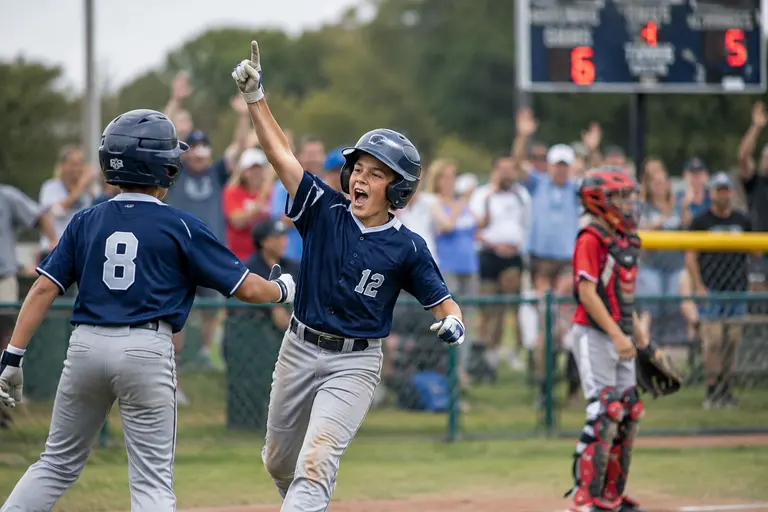
The operator outlined a mix of programming at Unrivaled Sports Park that included local youth baseball and softball leagues, clinics and free community access days. It also identified school playoff and championship games as a use for the site. These activities place different demands on the calendar: a league needs recurring times, while a school postseason game may need a field on a particular date. A free access day can offer a way to use the facility without joining a league, but its value depends on how often it happens and how families secure a spot.
The announcement identified the Vegas for Athletes baseball tournament as starting in 2027 and positioned the complex for regional and national tournaments. That makes the event part of the park’s stated plans, not evidence of teams already visiting or of spending generated by their visits. For a local league, the scheduling issue is not whether tournaments are booked at all, but whether they occupy dates the league also needs. Six diamonds provide multiple fields at one address; the number does not show how time will be divided.
A posted calendar would let coaches and families see whether community programming gets usable hours. For a coach running a weekly session, a recurring after-school slot is more useful than the same amount of field time offered on scattered dates. For a family considering a clinic, knowing whether registration is required and whether equipment is provided can matter as much as an advertised price. The reopening materials identify the types of use the operator intends to support, but do not establish recurring hours or participation costs.
School postseason games are a useful test of coordination because the venue’s availability has to match a competition calendar. A renovated field can be suitable for a playoff without being available on the date the schools need it. Hosting a championship would demonstrate that the venue and schools secured a date; it would not establish recurring access for youth leagues or free play. Those outcomes should be assessed separately rather than treating every scheduled event as evidence of the same community benefit.
Measuring Community Access at the Las Vegas Park
The November 10, 2026, reopening gives east Las Vegas a clear point from which to assess the project. The six rebuilt fields, preserved replica features and refurbished restaurants are documented changes. Whether the venue reaches children who did not previously play there is a separate question. Participation counts would be more informative if they distinguished repeat visits from first-time participants, since a busy weekend can fill the park without showing whether access has widened.
Field allocation is the other measure worth following. A record of hours reserved for local leagues, schools and free sessions would help show whether the programming announced at reopening was reflected in actual bookings. Availability by day and time would give those totals meaning, especially if tournament blocks fell on the same dates that leagues or schools requested. The reopening coverage did not provide booking records or evidence of how any scheduling conflicts were resolved.
The project offers a useful example of how an operator can rebuild an existing youth venue without discarding its recognizable playing features. Calling it a model for community engagement requires evidence that the refurbished fields serve residents regularly, not just that the park can host a large event. Published fees, recurring community hours and participation records would make that judgment possible. For youth coaches and families, the strongest sign of success would be a field they can book and afford to use week after week.