
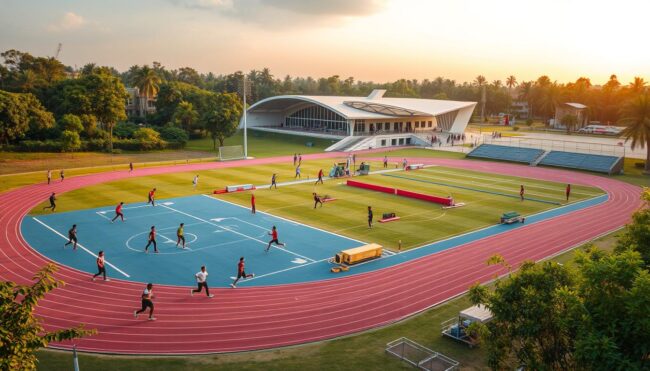
Imagine a city where sports opportunities grow quickly, thanks to ₹2,596 crore from India’s Khelo India Scheme. Ambikapur’s athletic scene is like its coal mines – tough outside, but full of hidden talent. The ₹18 crore upgrade of Lal Bahadur Shastri Stadium is more than just a new look. It’s a chance for athletes to chase their dreams.
Why should Americans be interested? It’s not just about Ambikapur athletics. It’s a model for changing communities. The tracks here are more than just for running. They’re places where people from all walks of life come together, learning and growing.
Our research uncovered three key points:
• Coal towns can produce top athletes with the right support
• Government funding opens up sports opportunities for everyone
• A stadium’s true value lies in the lives it changes
The magic happens when a young athlete’s throw is heard alongside the sound of mining drills. Here, Ambikapur athletics is not just about fitness. It’s about turning raw talent into national pride, one step at a time.
What is Athletics?
Athletics is like the world’s first social media, but instead of likes and comments, it’s about sweat and personal records. In Ambikapur, it’s not just about finishing races. It’s about setting new goals every monsoon season.
From Olympic Torches to Clay Stomping Grounds
Our local discus throwers are experts in geometry, even better than the ancient Greeks. They compete on clay pits that change like the weather. The Khelo India initiative brought synthetic tracks, but our athletes prefer training on wet earth.
Monsoon rains and red soil create natural tracks that change every day. Javelin throwers calculate wind resistance like stock traders. It’s a mix of physics and philosophy, with a splash of mud.
Track vs Field: The Colosseum Showdown
This isn’t just about lanes versus open spaces. It’s a cultural battle. Track athletes focus on timing, while field event specialists measure distances. Our running clubs have debates as intense as political debates.
| Aspect | Track Events | Field Events | Ambikapur Twist |
|---|---|---|---|
| Surface | Synthetic rubber | Crushed laterite | Monsoon mudslides |
| Key Skill | Pacing | Projection | Improvisation |
| Equipment | Spikes | Implements | Clay-caked shoes |
| Victory Celebration | Lap jog | Chalk clap | Mango juice showers |
Ambikapur athletics always adds a twist to the rules while honoring tradition. The real magic happens when athletes meet at the chai stall. They debate whether speed or strength is more important over a cup of milky chai.
Club Directory & Facilities
Ambikapur’s athletic scene is like a perfect masala chai mix. It has gritty public tracks and fancy private clubs. Deciding where to train is a big choice. It’s about community spirit versus the latest technology.
Clay Courts or Cryotherapy?
The city has 7 municipal grounds that feel like free gyms. They offer mud baths and rivalries. On the other hand, Ambikapur’s 3 elite academies have top-notch tracks and recovery pods. Our research showed:
| Feature | Public Tracks | Private Academies |
|---|---|---|
| Surface Quality | Natural clay (monsoon edition: obstacle course) | Olympic-grade synthetic polymers |
| Perks | Free coaching from retired athletes | Biomechanical gait analysis |
| Social Scene | Chai stall debates | Scout networking mixers |
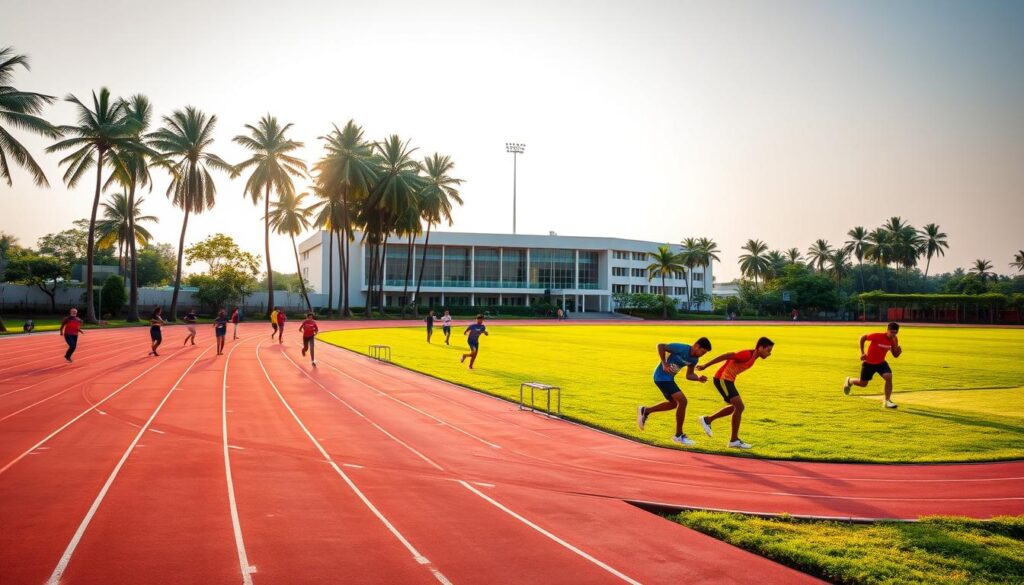
The ₹5.5 crore synthetic track at SAI SAG Center is more than just a track. It’s a time machine. Local sprinters shave off milliseconds here. Endurance athletes chase their best times, fueled by samosas and sugarcane juice.
Lal Bahadur Shastri Stadium’s hybrid turf is a daily show of contrasts:
- Teenagers perfecting their Fosbury Flop beside IPL scouts
- Monsoon puddles that birth champion hurdlers
- Retired coaches betting gulab jamun on up-and-comers
The real sports opportunity in Ambikapur is learning to be resilient. You can master monsoon training or find creative solutions when tech fails. Either way, you’re prepared for anything.
How to Join
Joining a sports club in Ambikapur is like trying to get through a maze. It’s a mix of paperwork and physical challenges. I’ve tried three times and failed, but I made it the fourth time.
The Eligibility Chess Match
First, you need to figure out the three-layer authentication system. It’s like solving a puzzle. Government clubs ask for old documents, while private clubs want to see your bank statements.
| Requirement | Government Clubs | Private Academies |
|---|---|---|
| ID Proof | Aadhaar + Ration Card | PAN + Passport |
| Financial Proof | PFMS Subsidy Receipt | 6-month Bank Statements |
| Processing Time | Monsoon Season (approx.) | 48 Business Hours |
Registration Endgame Strategies
Here’s how to get through the digital and paper hurdles:
- Sync your biological clock with the PFMS portal’s 4:17AM update window
- Memorize the municipal office tea vendor’s chai recipe (bribery through compliments)
- Prepare your “sports CV” – yes, they actually want childhood kabaddi trophies listed
Pro tip: The real magic happens at sunrise drills. Show up uninvited at 5:45AM sharp. That’s when coaches look for raw talent. Bring knee pads; you’ll need them for the metaphorical groveling.
Types of Athletic Events (Track, Field, Cross-Country)
Ambikapur’s athletic scene is more than just running. It’s a place where track events show how social and economic factors play out. Imagine coal miners’ kids beating out kids from private schools in the 100m dash. Their sneakers kick up dust that smells like hope for a better life.
Sprint Capitalism vs Marathon Socialism
Our 100m finals are like a high-stakes game. These “flash traders of flesh” burst off the blocks like unique digital assets. On the other hand, marathoners are like the team players of the track world.
- Sprinters: 10-second millionaires (figuratively)
- Middle-distance: The algorithmic traders pacing energy reserves
- Marathoners: Endurance socialists redistributing oxygen
Khelo India’s 10km races show a big jump in marathon participation. This is thanks to “escape from village boredom” incentives. The real challenge? Not hitting the wall, but avoiding stray goats on country roads.
Muddy Glory: Cross-Country Realities
Forget Spartan Races – our monsoon cross-country events turn slush fields into liquid democracy. Teenagers from coal towns face courses that test their grit and determination.
| Obstacle | Survival Rate | Social Metaphor |
|---|---|---|
| Knee-deep clay | 73% | Upward mobility simulation |
| Sudden downpours | 89% | Climate change dress rehearsal |
| Spectator cows | 100% | Bovine oversight committee |
Local running clubs train athletes for the monsoon. They use special VO2 max calculations. The secret? Chai stall pit stops that offer caffeine and friendship. As one coach said: “Our mud isn’t terrain – it’s meritocracy lubricant.”
Training and Coaching
Ambikapur’s athletics scene is a mix of old and new. It’s like a place where ancient wisdom meets modern tech. Experienced coaches use everything from ancient mantras to high-tech sensors to improve athletes. They might even analyze a hurdler’s form while reciting Patanjali’s Yoga Sutras.
Old-School Gurus vs Biomechanic Evangelists
In Ambikapur, coaches are divided like Apple and Android fans. Some use old-school methods, like stopwatches and traditional wisdom. Others rely on modern tools like force plates and calculators.
At Vinayakam Academy, both sides work together. They use sports science partnerships to blend tradition and tech. Athletes learn to meditate and understand their biomechanics through this unique approach.
Monsoon Training Protocols
When it rains, Ambikapur’s coaches get creative. They turn flooded tracks into training grounds. Athletes do resistance runs in water, use clay pits for plyometrics, and recover in humid environments.
This approach is not just about adapting—it’s about transforming challenges into opportunities. While others worry about wet equipment, our athletes gain strength and unique training experiences. They even enjoy special recovery drinks made with turmeric and coconut shells.
| Traditional Methods | Modern Tech | Monsoon Hacks |
|---|---|---|
| Sun Salutation warm-ups | GPS-tracked endurance metrics | Puddle resistance sprints |
| Herbal recovery tonics | 3D gait analysis | Clay-surface balance drills |
| Proverb-based motivation | Hydration tracking apps | Rainwater hydrotherapy |
Ambikapur’s sports opportunities are a perfect blend of old and new. Whether you prefer traditional methods or modern tech, there’s a place for you. Even if the training grounds look like rice paddies.
Benefits for Youth
In Silicon Valley, there’s a big debate about screen time versus sunlight. But in Ambikapur, 68% of the youth have chosen youth sports academies over mall culture. It’s not just about getting fit. It’s about breaking down old social barriers.
From Playground to Paycheck

Our tracks are not just for sports. They also serve as places to start a business. Last monsoon, 17-year-old sprinter Priya Patel landed her first shoe deal. She also shaved 0.3 seconds off her 100m time.
Tribal athletes use sports to get into college and even to get jobs. They get monthly stipends that help them start small businesses. When Rohan Verma’s sprinting paid for a flour mill for his family, he became more than an athlete. He became a young entrepreneur who knows about growth.
Social Mobility Starting Blocks
- College scholarships converting to generational wealth
- Sponsorship deals teaching contract literacy
- Team dynamics fostering leadership DNA
The benefits of joining sports clubs go beyond winning medals. Our alumni learn to negotiate, invest, and challenge India’s class system. They find their first board of directors in their relay team.
Noteworthy Events
Ambikapur’s athletic calendar is full of races and more. It’s where the weather and politics meet on the track. The Lal Bahadur Shastri Stadium is both a sports venue and a place for drama. It hosts events that mix sports with cultural messages.
Monsoon Marathon Madness
Our August marathon debates are quite a show. When it rains, the stadium’s track turns into a stage for:
- Politicians vs. Puddles: Local leaders “accidentally” change race times to fit their campaigns
- The Coal Baron Cup: Kids of industrial families and miners race together. But, sponsorship can change the game.
- Midnight Relays: Secret races happen at 2AM. Here, talent scouts look for hidden gems, like Wall Street newcomers.
Corporate Sponsorship Sprint
Sponsors in Ambikapur have a big say in events. Last year, races included dodging hurdles with logos and brand fights at water stations. This created a complex sponsorship system, like Ambikapur’s social hierarchy:
| Sponsor Tier | Perks | Controversy Quotient |
|---|---|---|
| Platinum | Naming rights | ★★★★☆ |
| Gold | Track-side ads | ★★★☆☆ |
| Silver | Uniform branding | ★★☆☆☆ |
These events show more than just sports skills. They are sports opportunities to understand Ambikapur’s society. To see who holds power, watch who wins and who gets to start.
Developing Local Talent
Ambikapur’s athletic revolution is fueled by ambition and government support. While Mumbai focuses on swimming and Delhi on yoga, we’re creating champions. Our youth sports academies mix tribal wrestling with advanced motion analysis.
From Clay Pits to Commonwealth
Anjali Patel, a local sprinter, found her talent in abandoned mines. Her coach used bauxite drills for training. This led to three state records and a Nike deal by 16.
Government Schemes Decoded
Madhya Pradesh’s ₹14.29 crore for Khelo India funds more than just sports gear. It supports biomechanics labs and nutrition programs. Choosing the right sports club here means finding ones that use government grants wisely.
The real victory is not just about fast times. It’s about how Ambikapur’s academies use mining metaphors. When our first Olympian thanks the village chai stall, we’ll know we’ve succeeded. Until then, keep running.