
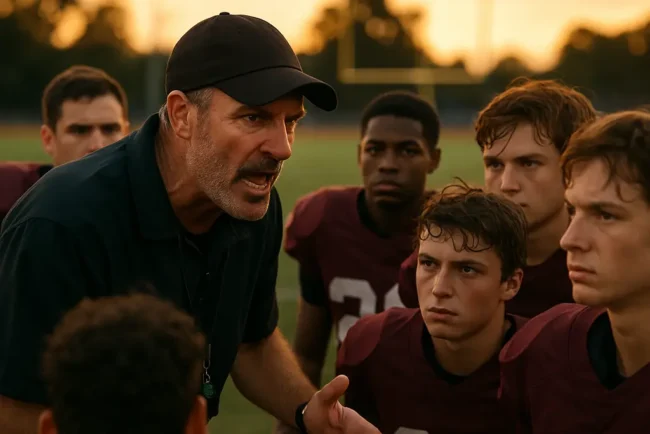
Class 4A Coaching movement in Georgia entered late August 2026 with a clear theme: several struggling programs changed leadership, while a smaller group of long-tenured coaches continued to serve as competitive reference points. The available reporting showed 15 new head coaching hires in Georgia Class 4A as of August 5, 2026, a large enough number to affect preparation habits, staff roles, and community expectations before results offer firmer evidence.
Class 4A Coaching Changes And Competitive Balance
The central question is not simply whether new coaches will win more games. Competitive balance in a high school classification depends on whether lower-performing programs can narrow weekly margins, stabilize player participation, improve junior varsity and ninth-grade pathways, and avoid steep drop-offs after injuries or graduation. The 2026 Georgia Class 4A changes touched several programs that had recent losing records, which makes the balance question relevant but not settled.
According to the Atlanta Journal-Constitution, there had been 15 new head coaching hires in Georgia Class 4A football as of August 5, 2026, with East Jackson and Bainbridge identified among the notable cases AJC report on Class 4A hires. That number signals turnover, but turnover alone does not prove parity. Some schools hired coaches with rebuild experience, others promoted from within, and a few turned to coaches with prior ties to the area or program.
Class 4A Coaching In The Rebuild Tier
Several hires were made by teams coming off difficult stretches. Ridgeland hired Shane Cauthorn in August 2026 after the program had gone 5-53 since winning a region title in 2019. Riverdale promoted Marcus McKinney from running backs coach after the team had gone 3-27 across three seasons under the previous head coach. Hardaway promoted Reginald Wedner after a 1-9 season in 2025 under Will Whilden.
Those records matter because competitive balance often shifts first at the bottom of a region. A team moving from one win to four wins may not immediately threaten the classification’s leading teams, but it can make region scheduling less predictable, force opponents to keep starters engaged longer, and create better participation incentives for younger players. In grassroots terms, modest improvement can be meaningful if it keeps sophomores and juniors in the program and gives middle-school players a clearer reason to stay connected to football.
Staff Continuity Versus Fresh Direction
Internal promotions, such as McKinney at Riverdale and Wedner at Hardaway, tend to preserve some day-to-day familiarity. That can reduce disruption in weight-room routines, terminology, and parent communication. It can also limit the reset period for returning players because the new head coach already knows the roster. The trade-off is that internal promotions may need time to show whether they bring a new competitive edge or mainly extend existing systems.
External hires or returning coaches can have a different effect. Joe Dupree returned to McDonough after a previous head coaching tenure at Southwest that produced a 43-85 record over 13 seasons. McDonough had gone 4-16 in the two previous seasons under the outgoing coach. The available record does not prove what will happen next, but it does show why McDonough’s change should be judged across more than one result column: roster retention, defensive discipline, and region competitiveness may be earlier indicators than a deep playoff run.
Experience Profiles Behind The 2026 Hires
The strongest evidence for potential near-term impact comes from coaches whose prior records are documented. Ashley Henderson at East Jackson stood out because he had led Jasper County to its first 10-win season since 1992, after that program had endured a 15-game losing streak. His record at Jasper County was 27-19 over four seasons. That profile suggests program-building experience, though East Jackson’s own roster depth and region context still determine how quickly any model transfers.
Bainbridge hired Jamey DuBose in August 2026. The reporting noted that DuBose had gone 8-14 over two seasons at Biloxi, Mississippi, and had earlier won three state titles in Alabama. Bainbridge’s context was different: the program was coming off an 0-6 start in 2025 and had not won a title in eight years. For competitive balance, that hire is not easy to categorize. A coach with state-title history joining a recognized program can raise standards, but the recent record shows that a rebound should not be assumed without on-field evidence.
| Program | 2026 Coaching Change | Verified Context | Balance Lens |
|---|---|---|---|
| East Jackson | Ashley Henderson hired | 27-19 over four seasons at Jasper County | Rebuild track record may raise floor |
| Bainbridge | Jamey DuBose hired | Three Alabama state titles; 8-14 at Biloxi | High-ceiling résumé, recent mixed results |
| Ridgeland | Shane Cauthorn hired | Program was 5-53 since 2019 region title | Large improvement gap from recent baseline |
| Riverdale | Marcus McKinney promoted | Program was 3-27 in prior three seasons | Internal promotion tests continuity value |
Coordinator Hires And Player Development
Class 4A Coaching changes also included roles with coordinator roots. Logan Winkles, a former Upson-Lee coordinator and player, was hired at Upson-Lee in August 2026 to replace Justin Elder. Elder had a 51-48 record across nine seasons and moved to coach Mary Persons’ ninth-grade team. That detail is relevant because ninth-grade football often shapes roster depth two and three years later, especially in public-school programs where retention and physical development matter.
Pace Academy promoted Kevin Johnson in August 2026 after he had coached there for 16 years, including roles developing NFL players. Pace had gone 3-7 in 2025 and had not won a playoff game since its 2015 Class 2A championship. For a school with established institutional memory, the promotion may protect culture while changing accountability at the top. The harder question is whether continuity can produce enough line depth and week-to-week consistency in Class 4A play.
Why Tenure Still Sets The Standard
Turnover draws attention, but stable programs often define the level that new coaches must reach. As of early August 2026, Josh Robinson at Northwest Whitfield was the longest-tenured head coach at one GHSA Class 4A school, with 16 years in place and a 103-62 record there, according to the AJC’s tenure list AJC Class 4A tenure list. The same reporting also identified long-tenured coaches such as Hardy at Greater Atlanta Christian and Brian Nelson at Mary Persons as part of the continuity picture.
Tenure gives a program more than playbook stability. It can shape offseason calendars, assistant-coach retention, middle-school alignment, booster communication, and player expectations. In practical terms, a 16-year head coach often has a clearer system for turning freshmen into varsity contributors. New hires can close gaps, but they may need more than tactical changes to match programs with established development cycles.
What Stability Means For Regions
Regions with entrenched coaches may be less affected by a single hire unless the incoming coach raises participation quickly or improves line play. Regions with multiple struggling programs may shift faster because one or two competent rebuilds can change the middle tier. The available data does not include full region-by-region scoring margins, roster sizes, or returning starter counts, so any claim about immediate standings movement would be premature.
That caution matters for community analysis. A new coach can bring energy, but high school football improvement is usually visible through attendance in summer workouts, junior varsity competitiveness, special-teams discipline, and the number of players who stay in the program after a losing stretch. For readers curious about similar trends outside Georgia, Texas Sportsmen offers related local sports coverage in the same network.
Practical Indicators To Track After The Changes
The safest way to assess Class 4A Coaching impact is to separate process signals from final records. Wins are essential, but they can be shaped by schedule strength and region structure. Process indicators show whether a new staff is changing the habits that support sustainable balance.
- Roster retention: Programs coming off 1-9, 3-27, or 5-53 stretches need returning players to stay engaged before improvement can hold.
- Lower-level alignment: Ninth-grade and middle-school development can help schools close depth gaps over several seasons.
- Competitive losses: Smaller margins against established opponents may be an early sign of better preparation.
- Region middle tier: Balance improves when former bottom-tier teams begin splitting games with comparable opponents.
These indicators fit the evidence better than firm predictions. The 15 hires were real, and several were connected to programs with documented struggles. Yet the research does not verify facilities levels, returning production, injury status, or schedule difficulty for each school. Without those inputs, the sound analysis is that Georgia Class 4A had meaningful coaching volatility in August 2026, with the strongest balance effects likely to appear first in the lower and middle tiers of regions.
Georgia Class 4A Coaching Balance
Class 4A Coaching changes in Georgia were significant in number and varied in type. Henderson brought a documented turnaround record to East Jackson. DuBose brought state-title history and a mixed recent stop to Bainbridge. Ridgeland, Riverdale, Hardaway, McDonough, Upson-Lee, and Pace Academy each showed different versions of the same question: can new leadership improve daily standards enough to alter competitive balance?
The evidence supports a cautious reading. Some programs had enough recent losses that even moderate improvement could make regions more competitive. Long-tenured coaches such as Robinson still provided benchmarks for consistency. The 2026 impact should therefore be measured not just by playoff brackets, but by whether weaker programs improved retention, depth, and weekly competitiveness. That is where coaching changes most directly connect to grassroots football growth.