
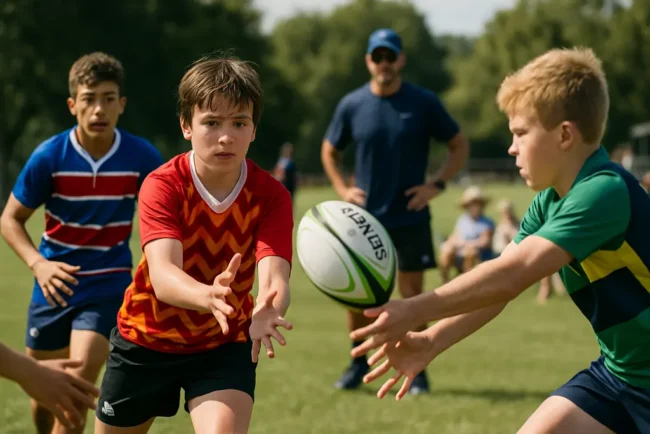
The Seattle Seawolves’ Youth Rugby Camp took place on August 10–13, 2026, at Starfire Sports in Tukwila, Washington. The team listed the camp for ages 9–14, running from 9:00 a.m. to 3:30 p.m. on weekdays, with optional after-care until 5:00 p.m.; the listed cost was $250 for the week, plus $50 for after-care, according to the club’s team announcement. As of August 26, 2026, the cited material does not provide attendance totals, participant retention figures, or club registration follow-up, so the clearest analysis rests on the camp design, access measures, and its place within Seattle’s wider youth rugby push.
The Youth Rugby Camp Format And Access Model
Schedule, Cost, And Care Window
The structure of a youth camp often says as much as the marketing language around it. In this case, the weekday 9:00 a.m. to 3:30 p.m. schedule fit a full-day sports format rather than a short introductory clinic. That matters for coaching, because a full day allows staff to repeat basic movement patterns, build small-sided games, and give younger athletes time to adjust to a sport many may not have played before.
The optional after-care window until 5:00 p.m. also had a practical community function. Families with workday commitments often face barriers that are not strictly about sport interest or talent. A later care option can help families manage transportation and supervision, though the extra $50 fee means the benefit was not cost-free. The $250 camp price placed the program in the paid youth-sports camp category, which makes the scholarship element more relevant for any access analysis.
Youth Rugby Camp As Entry Point
The Youth Rugby Camp was described as an entry-level experience open to all skill levels, with an emphasis on running, passing, catching, movement, teamwork, and confidence building. That list is notable because it prioritizes transferable athletic skills before advanced rugby detail. For ages 9–14, that approach can reduce the intimidation factor that sometimes surrounds rugby for families unfamiliar with the game.
Participants were also set to receive youth giveaways, including “Run With the Pack” shirts, stickers, wristbands, mini rugby balls, and other rugby-related gear. Giveaways do not create development by themselves, but they can make a first contact with the sport feel connected to a club identity. For a professional rugby team trying to build local recognition, that type of low-stakes connection has value if followed by school, club, or clinic pathways.
Why Fundamentals Matter For Rugby Growth
Skills Before Specialization
Rugby development at the community level depends on making the first session understandable. Running, passing, catching, and movement are not just rugby skills; they are general athletic skills that fit younger athletes from soccer, basketball, flag football, track, or no organized sport background. That is why an entry-level camp can be useful even if only a share of participants later join a rugby club.
The cautious read is that exposure is not the same as conversion. A camp can introduce technique, terminology, and team habits, but it cannot prove long-term growth unless organizers track later participation. Useful indicators would include repeat-camp rates, local club registrations after the camp, school flag-rugby participation, and whether families from scholarship places remain involved after the first experience.
Community Programs Around The Camp
The Seawolves’ youth work sits inside a broader set of outreach efforts. The research notes identify “Run With the Pack” as a program that works with groups such as Boys & Girls Club, YMCA, and underserved-community organizations to bring rugby-inspired activities to children in grades 1–8. The notes also identify a “Rugby in Schools” initiative involving elementary, junior high, and high schools through physical education classes, assemblies, and youth flag-rugby tournaments.
The club also reported more than 1,063 community-engagement hours from players, coaches, and staff during the 2025 season, covering clinics, youth coaching, fan meetups, and sport-ambassador work. That number is useful, but it should be treated as an input measure. Hours donated show scale of effort; they do not by themselves show how many children continued playing, how many schools added repeat rugby programming, or how many local coaches were trained.
- Access: Scholarship spots through the Tukwila Community Center reduced some financial barriers, though the number of places was described as limited.
- Skill design: The camp centered on movement and ball skills that fit beginners.
- Pathway value: School and community programs can help connect a one-week camp to later participation.
- Data gap: Public outcome measures were not included in the cited camp material.
Snoqualmie Valley Clinic Adds Regional Context
What The February 2026 Clinic Showed
The Seawolves’ camp was not the only youth rugby touchpoint in the region during 2026. On February 8, 2026, the Seawolves and the Snoqualmie Valley Wildcats Rugby Club hosted a free clinic for players from under-12 through high school; the clinic required no fee or prior experience, and participants were grouped by age and gender, according to an OurSports Central report.
That clinic gives useful context for the August camp. Free clinics lower the first barrier. Paid camps can then provide a longer development block for families ready to commit more time. For a professional club, the two formats serve different parts of the participation funnel. One creates initial exposure across a wider age range; the other offers a more structured teaching environment for a narrower 9–14 age group.
What Remains Unclear
The strongest community-development claims would require data not included in the cited material. Attendance at the February clinic, attendance at the August camp, scholarship uptake, player feedback, and post-event club registration would all help measure impact. Without those figures, it is safer to say the Seawolves created access points rather than to claim confirmed growth in rugby participation.
For local clubs, the key issue is not only whether a professional team runs a camp. The next step is whether schools, park programs, and neighborhood clubs can absorb interested beginners after the event. A one-week experience can spark interest, but a season-long pathway needs coaches, fields, age-grade teams, and parent education around how the sport is played.
Community Development Lessons For Local Clubs
Operational Choices Worth Tracking
The Youth Rugby Camp offers a useful case for community clubs because it connects instruction, access, and brand presence in one program. The camp did not rely on elite selection language in the available description. Instead, it framed participation around all skill levels and confidence building. That choice fits the needs of younger athletes who may be testing rugby for the first time.
Clubs trying to build similar programs should track basic indicators before making broad claims. Registration source, age distribution, previous rugby experience, scholarship use, return interest, and follow-up club placement are all measurable. These data points help coaches understand whether the program is reaching new families or mostly serving children already attached to the sport. For related sports-community coverage, SCAR Sports offers insights on local development themes.
Scholarships And Local Partnerships
The Tukwila Community Center scholarship collaboration is one of the more important access details in the camp model. Youth sports fees often filter participation before a child reaches the field. A limited scholarship pool does not remove that issue for every family, but it signals that the organizer recognized cost as a real constraint.
Partnerships with community centers, schools, and youth organizations can also make rugby feel less distant. In areas where rugby is still building mainstream familiarity, parents may trust a program more when it is connected to known local institutions. That trust is especially relevant for families who do not have a rugby background and need clear information about age grouping, supervision, equipment, and the basic nature of activities.
Seattle Seawolves Youth Rugby Camp Takeaways
Value Of The 2026 Camp
The best reading of the Youth Rugby Camp is that it served as a structured grassroots step rather than a fully proven participation breakthrough. The camp had clear dates, a defined age group, a full-day teaching format, an after-care option, beginner-friendly skill goals, youth giveaways, and a limited scholarship path. Those are concrete design choices that support access and early player comfort.
The unresolved question is measurable impact. The Seawolves have stated a long-term ambition to put rugby balls in the hands of 20,000 youth across the Pacific Northwest by the 2031 Men’s Rugby World Cup in the United States. The August 2026 camp fits that direction, but its true value will be clearer only if future reporting shows how many participants moved into school programs, local clubs, or repeat rugby activity. For now, the camp stands as a credible community-engagement effort with useful structure and limited public outcome data.