
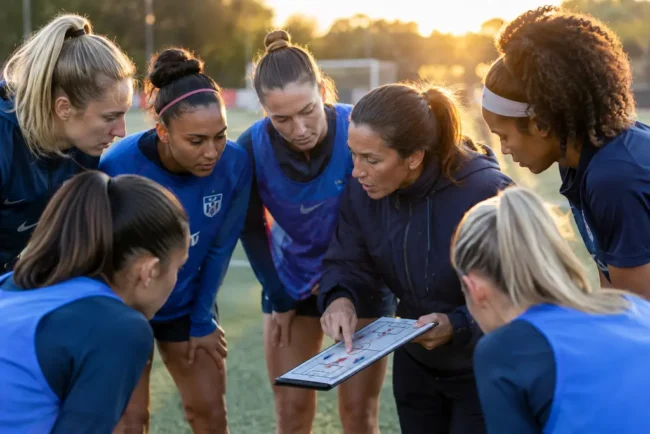
The October 2026 USWNT roster has now moved from selection debate to retrospective analysis. Emma Hayes named a 26-player training camp group on September 29, 2026 for home friendlies against Spain on October 10 in Washington, D.C. and October 13 in Chester, Pennsylvania, with Spain identified by U.S. Soccer as the reigning Women’s World Cup champion U.S. Soccer roster release. Because those matches had already been played by November 13, 2026, the useful question is not who might be tested, but what the roster construction said about player development, club form and succession planning.
USWNT roster Snapshot After Spain Camp
Hayes’s group blended established internationals with players still early in their senior national team exposure. The roster’s average age was 25.0 years, with Lindsey Heaps and Rose Lavelle the only players over 30, while Lily Yohannes was the youngest at 19. That age profile matters because it gave the staff a camp environment where experienced players could set training standards while younger players were measured against a high-level opponent.
USWNT roster Age And Cap Balance
The cap distribution was one of the clearest markers of where the staff placed its emphasis. Three players had more than 100 international caps: Heaps with 178, Lavelle with 122 and Mallory Swanson with 103. Four more sat in the 50-to-100 range: Emily Fox with 78, Tierna Davidson with 70, Sophia Wilson with 63 and Trinity Rodman with 57. At the other end, nine players had 11 or fewer caps. That split created a practical evaluation structure: the staff could see how low-cap players responded around a core that already understood the speed and pressure of senior international football.
For coaches at club and academy level, this is a useful roster-building lesson. A group does not need to be either fully veteran or fully developmental. A balanced camp can protect standards while still giving new players the daily reference points they need. That is especially valuable in national-team windows, where training time is short and assessment must happen quickly.
First-Time Call-Ups And Youth Pathways
The four first-time senior call-ups were goalkeeper Jordan Silkowitz, midfielder Evelyn Shores, forward Pietra Tordin and forward Trinity Byars. U.S. Soccer noted that all four had significant Youth National Team experience, which points to a selection pattern based on accumulated development evidence rather than one isolated club moment. That matters because youth international exposure can help players understand camp tempo, tactical language and the expectations around recovery, travel and video work.
The connection between youth progression and senior opportunity is not automatic, but it becomes stronger when players carry form into the professional game. For readers tracking how age-group experience feeds senior teams, our related analysis of USWNT U-20 roster development offers a similar lens on caps, age bands and competition pathways. For insights into player development systems in another sport, check out the study of baseball pathways at Books on Baseball.
Club Form And Return Cases
The October camp also showed that club production remained a strong selection signal. This was not only a youth evaluation group; it included senior players whose domestic form or return timelines demanded another look. That distinction is important. National teams cannot be built from potential alone, but they also cannot rely only on past status. The best evidence usually comes from recent match rhythm, repeatable output and the ability to translate club habits into a national-team structure.
Ashley Sanchez And NWSL Production
Ashley Sanchez’s return was one of the clearest examples. She had been absent from the national team since her last USWNT match on October 30, 2024. During the 2026 NWSL season, she scored 20 goals in 30 matches for the North Carolina Courage, tied the league single-season scoring record and won the Golden Boot, according to the league’s official announcement NWSL Golden Boot report.
For a senior player returning to the pool, that level of finishing output changes the discussion. It gives the coaching staff a current, measurable case to test against international defenders. The key assessment after camp was not simply whether Sanchez had scored frequently in the league, but how her movement, pressing choices and combination play fit with forwards and midfielders already established in the national setup.
Mallory Swanson’s Managed Return
Mallory Swanson’s inclusion carried a different kind of evaluation. She was 28, had 103 caps, and had last appeared for the national team in the 2024 Olympic Gold Medal match. She gave birth in November 2025, returned to NWSL action on May 16, 2026, and received field time in the first Spain match on October 10. The facts support a careful reading: this was not a first look at talent, but a reintroduction of a proven international player into a group that had continued to change around her.
From a development and coaching standpoint, that kind of return affects the entire forward pool. Younger attackers can be evaluated alongside a player who has already handled knockout-stage and medal-match environments. At the same time, Swanson’s return created another reference point for tempo, wide-channel decisions and off-ball responsibility against Spain.
What The Spain Matches Tested In Development Terms
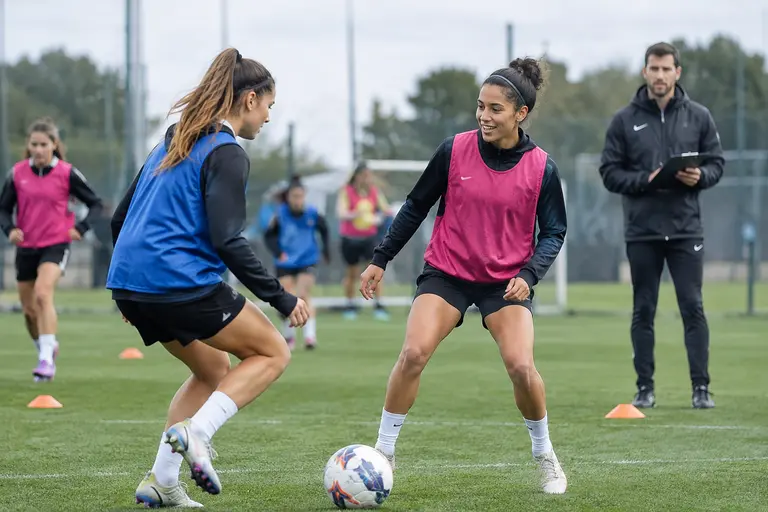
The Spain camp came after the team’s first match window in just over four months, following a June 2026 trip to Brazil. That gap made the roster composition more meaningful. With limited recent match time together, the staff had to balance continuity with experimentation. A camp against Spain was a demanding setting for players moving from club rhythm into international roles.
European Club Context
Five European-based players were included: Lily Yohannes at Lyon, Alyssa Thompson and Naomi Girma at Chelsea, Emily Fox at Arsenal and Sam Coffey at Manchester City. U.S. Soccer reported that all but one were with clubs in UEFA Champions League competition. That context matters because weekly club demands can shape decision speed, pressing habits and comfort under pressure. It also places those players in environments where tactical detail and rotation management are part of normal preparation.
For Hayes, the European group offered another layer of comparison with NWSL-based players. The evaluation was not a simple league-versus-league judgment. A more useful reading is role-specific: how each player’s club responsibilities prepared her for the national team’s needs against an elite opponent.
Attacking Depth And Chance Creation
The first-time forward call-ups also reflected club output. Trinity Byars entered camp with 10 goals and 2 assists for San Diego Wave FC, leading her club in goal contributions. Pietra Tordin had 7 goals and 9 assists. Those numbers supported their inclusion because they showed end-product in different forms: Byars through scoring volume and Tordin through a combined goal-creation profile.
For youth-focused coaches, this is a key takeaway. Selection at senior level rarely comes from one trait. A forward’s case can be built through finishing, movement, pressing work, chance creation, availability and fit within a team’s attacking structure. The October group gave Hayes a chance to compare different attacking profiles in the same camp setting rather than relying only on club footage.
USWNT Roster Lessons For Player Development
The October camp showed that the USWNT roster process under Hayes was built around layered evidence: senior caps, youth national-team background, club production, age profile and match context. It brought back established players such as Sanchez and Swanson while creating space for Silkowitz, Shores, Tordin and Byars. That mix gave the staff a broader read on the player pool after the two Spain matches.
For grassroots clubs and regional academies, the main lesson is practical. Development pathways are strongest when players face higher standards before they are asked to perform at the next level. Youth national-team experience, professional match output and exposure to demanding training groups all help create that bridge. The USWNT roster from October 2026 did not provide every answer, but it gave a clear view of how the senior program was testing depth without discarding experience.