

NFL Foundation grants added another measurable layer of support for youth football infrastructure on November 2, 2026, when the NFL Foundation and Local Initiatives Support Corporation awarded more than US$4.5 million to projects in 26 cities and towns. The awards were aimed at building or refurbishing community football fields, with youth players, families, schools, and local leagues positioned as the main users.
For sports facilities, the grant cycle matters because field quality can shape far more than the game-day experience. Surface condition, lighting, bleachers, fencing, and goalposts affect whether a field can support weekday practices, school use, youth league scheduling, and family access. The funding does not solve every facility gap, but it gives local operators a capital source that many school districts, nonprofits, and park systems cannot easily replace.
The national scale is also worth tracking. Since the program began in 1998, the NFL Foundation-LISC Grassroots Field Grant Program has committed more than US$70 million and helped create or improve nearly 500 football fields, according to the NFL Foundation release. That makes the program one of the more visible private-sector funding channels for youth football facilities in the United States.
What NFL Foundation grants Funded In 2026
Why NFL Foundation grants Matter Locally
The practical value of NFL Foundation grants begins with the field itself. The 2026 awards supported projects that can include full turf installation, lighting, bleachers, scoreboards, fencing, and goalposts. Each category touches a different access problem. A playable surface addresses safety and scheduling reliability. Lighting extends use into evening hours. Bleachers and related spectator amenities help schools and community leagues host families with fewer ad hoc arrangements.
The facilities angle is not limited to football programs. In many towns, a school field or community field is a shared civic asset. A synthetic turf installation or renovated natural grass surface can be used by school teams, local leagues, camps, clinics, and other community activities when policy and scheduling allow it. That shared-use model is where the return on a grant can become broader than a single sport, although actual outcomes depend on local governance, maintenance budgets, and fee policies.
How The 2026 Awards Fit A Longer Trend
The 2026 announcement followed several years of steady expansion. As of November 2024, nearly US$65 million had been awarded through the program, supporting more than 435 fields, according to NFL Media. By November 2026, the program total had moved past US$70 million and nearly 500 fields. The increase indicates continued field investment rather than a one-off funding push.
That trend is relevant for communities where youth football demand exists but facility capital is limited. The research notes identify projects in places such as Buena Vista, Colorado; Pajaro, California; and Washington, D.C. Some awards have targeted underserved or rural communities, including areas seeking a first dedicated field or upgrades to heavily used school and community facilities. The pattern suggests that the program is not only supporting large urban markets, although the exact distribution of need and outcomes requires project-by-project review.
For readers following the same grant cycle in greater detail, Ambikapur City has also covered the 2026 field grant awards and their facility implications.
Facility Features That Change Daily Use
Surface, Lighting, And Spectator Capacity
Field infrastructure is often judged by the finished look of new turf or fresh grass. From an operator’s point of view, the more useful question is how the upgrade changes weekly capacity. A better surface can reduce cancellations caused by poor field condition. Lights can open practice windows after school and after work. Fencing can help manage access, while goalposts and scoreboards support regular game operations.
Bleachers also deserve attention in youth sports planning. They are not only a spectator comfort feature. Safe seating can keep families away from sidelines, reduce crowding near team areas, and improve event control for schools and local organizers. For high school and youth games, that can affect how many events a site can reasonably host without overextending staff or volunteers.
Capital Support And The Maintenance Question
Capital grants can pay for the visible upgrade, but local partners still face the operating side. Turf needs upkeep, natural grass needs care, lights add utility and maintenance considerations, and bleachers require inspection. A grant award is strongest when it sits inside a facilities plan that names who maintains the field, who schedules it, who pays for repairs, and how community access is protected.
This is where youth football infrastructure can either widen access or reproduce existing barriers. A renovated field that is priced beyond local league budgets will have a narrower community impact. A field with fair scheduling rules, transparent rental policies, and shared school-community use can serve more athletes across age groups. The research supports the view that these grants improve physical assets; the access results depend on local decisions after construction or refurbishment.
- Surface quality: Improves playability when weather or heavy use would otherwise limit field time.
- Lighting: Extends practice and game windows, especially during shorter daylight periods.
- Spectator amenities: Helps schools and leagues host families with safer event flow.
- Shared-use planning: Determines whether the field serves only one program or a wider community base.
Measuring Access Beyond New Turf
Shared Use By Schools And Leagues
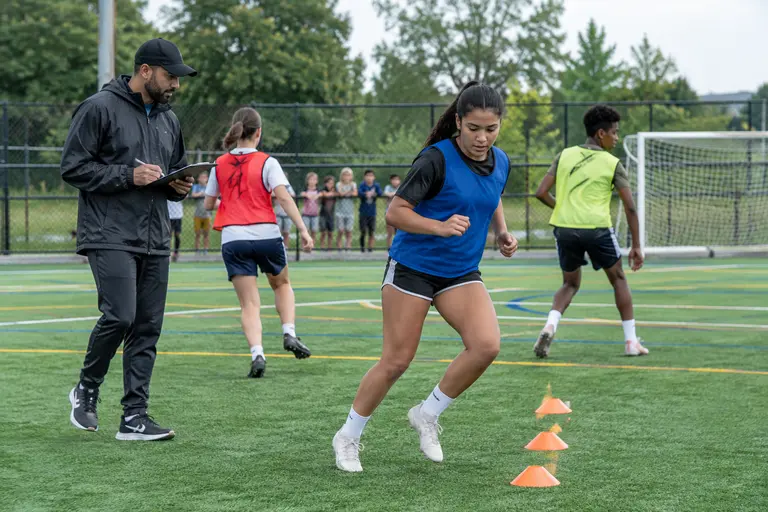
The strongest facility projects connect capital upgrades with predictable public benefit. In youth sports, that means asking who gets time on the field and at what cost. School districts may need priority for varsity and junior varsity teams. Local youth leagues may need weekend blocks. Community partners may need clinics or open-play hours. Without a public schedule or clear access rules, it is difficult to judge whether a new field meaningfully broadens participation.
Grant-funded facilities can also support family engagement. A safer field with better seating and lighting can make it easier for parents and guardians to attend practices and games. That does not automatically increase participation, but it removes some friction around transportation timing, evening use, and event comfort. In underserved or rural areas, those details can determine whether a facility becomes a daily community asset or a field used mainly for scheduled competition.
Caution On Outcomes And Reporting
The available program data is strongest on funding totals and field counts. It is thinner on long-term usage, injury reduction, participation change, and cost savings after upgrades. That does not weaken the facility case, but it should guide how the impact is described. The evidence clearly supports investment in new and refurbished football fields. It does not, by itself, prove that every funded site delivered the same level of access or community use.
For facility analysts, the next layer of evidence would be local reporting on hours used per week, number of teams served, rental costs, maintenance spending, and public access policies before and after each project. Those figures would show whether the grant created more playing time, safer scheduling, or lower barriers for youth programs. Until those local metrics are consistently available, the safest reading is that the grants create the infrastructure conditions for access, while local management determines the final reach.
NFL Foundation grants and Field Access
NFL Foundation grants are best understood as capital interventions in a larger youth sports system. The 2026 cycle added more than US$4.5 million across 26 communities, while the long-running program total surpassed US$70 million and nearly 500 fields. Those figures show real scale, especially for a sport where field condition can affect practice reliability, family attendance, and school-league coordination.
The key facility lesson is that infrastructure funding works best when paired with access planning. A renovated football field can support safer play, longer daily use, and better event operations. Yet the public value depends on pricing, scheduling, maintenance, and shared-use commitments. For readers comparing sports facility investment with broader sports coverage, the site My All-Time Best provides similar sports insights from the same network. For communities receiving grants, the next test is not only whether the field is built well, but whether it is used widely and maintained responsibly.