

The USMNT Jamaica friendly on December 13, 2026, is more than a year-ending fixture. It is scheduled for 3:30 p.m. ET at Inter Miami CF Stadium in Fort Lauderdale, Florida, and gives Mauricio Pochettino one more controlled environment to assess depth before a demanding 2027 calendar. U.S. Soccer has positioned the match as the team’s final game of 2026, after a fall stretch that included wins over Peru, Chile, Mexico and Canada, according to the official match announcement.
The timing matters. This is not a FIFA international window, so player availability will not mirror a full-strength tournament camp. That constraint makes the match more useful as a depth review than as a direct preview of a best XI. For coaches, club directors and youth development staff, the value sits in how the U.S. uses domestic options, manages a short camp and measures players against a regional opponent it could see again in meaningful competition.
Why The USMNT Jamaica friendly Fits The Calendar
Year-End Timing Creates A Different Test
December friendlies often sit in a tricky place for national teams. Some leading players remain with clubs abroad, while domestic-based players may have a clearer route into camp. Yahoo Sports reported that the match falls outside a FIFA window, meaning clubs are not required to release players and the roster is expected to lean toward MLS-based options and domestic prospects as reported by Yahoo Sports. That does not reduce the usefulness of the fixture. It changes the evaluation lens.
The coaching staff can treat the camp as a pressure check for players who may sit outside the first-choice group but are close enough to influence tournament planning. In tournament years, depth often decides how well a team handles injuries, suspensions, travel, short rest and tactical changes. A December match with limited availability can expose whether the next tier is ready for those assignments.
2027 Adds Urgency To Every Evaluation
The U.S. schedule in 2027 includes the Concacaf Nations League Finals, the Concacaf Gold Cup and the start of 2030 World Cup Qualifying. Those competitions will demand different roster builds. Nations League matches often call for sharp first-choice execution. The Gold Cup may require squad rotation and broader player usage. World Cup qualifying brings away-match conditions and limited margin for poor starts.
That is why the December 13 match carries practical weight. A player does not need to win a starting job that afternoon to help his case. He may need to show he can process tactical instructions quickly, defend transitions, support set-piece plans or maintain tempo under physical pressure. Those details matter in Concacaf play, where matches can shift on second balls, restarts and compact defending.
Roster Availability And Player Development
USMNT Jamaica friendly As A Roster Filter
The USMNT Jamaica friendly should work as a roster filter rather than a final verdict. Because key overseas-based players are not expected to be central to this camp due to club commitments, the staff can look at candidates who may be needed when the schedule tightens. The research notes identify Christian Pulisic, Weston McKennie and Folarin Balogun among players not expected to participate, which creates room for domestic-based options and younger players to receive closer attention.
For a national-team staff, that kind of game can reveal useful information. How does a player handle defensive spacing without the usual senior anchors around him? Can a forward press in the right moments rather than chasing aimlessly? Does a midfielder receive under pressure and play forward, or does he slow the match? These are not headline statistics, but they shape whether a player can be trusted in a knockout match or a qualifier.
Youth Pathways And Club Feedback
The research notes also point to recent debuts for young players such as Cavan Sullivan and Julian Hall during the fall period. If players from that age band are involved again, the match can help connect national-team exposure with club development plans. For grassroots coaches and academy staff, the lesson is not just that young players can be called in. It is that national-team readiness depends on repeatable habits: scanning before receiving, recovering position after turnovers, dueling without fouling and understanding match states.
This is where the friendly has value beyond the senior team. MLS clubs, academies and local coaches can track what profiles are being rewarded. The pathway is rarely straight, but national-team camps send signals about the traits being prioritized. A related look at USMNT roster selection and youth depth adds context to how recent windows have tested younger options and domestic development routes.
Tactical Value Against A Familiar Concacaf Opponent
Head-To-Head Context Sets A Baseline
The United States has a strong historical record in this matchup. Before the December 13 meeting, the teams have played 35 times, with the U.S. holding a 22-3-10 record. The match will be the 36th meeting and the first between the U.S. and Jamaica in Florida. U.S. Soccer also lists the U.S. as unbeaten in Fort Lauderdale and the wider Broward County area, with five wins and one draw.
Historical control, though, should not be confused with a simple assignment. Jamaica remains a relevant Concacaf opponent because the U.S. can face teams with similar athletic profiles, transition threats and compact defensive phases in future tournaments. A friendly gives Pochettino room to test structure without the cost of dropped points. The staff can examine spacing between center backs and midfielders, the timing of fullback advances and how quickly the team counterpresses after losing possession.
What The Match Can Show Tactically
The USMNT Jamaica friendly can answer specific tactical questions. If the U.S. dominates possession, can it create high-quality chances without forcing early crosses? If Jamaica sits deeper, can the U.S. midfield move the ball side to side quickly enough to open gaps? If the match becomes stretched, which players recognize danger early and stop counters before they reach the back line?
Those questions are especially relevant before a 2027 calendar that includes tournament knockout matches. Concacaf games are rarely won on talent alone. They require concentration through restarts, disciplined defensive recovery and patience against teams that can make the match uncomfortable. For Pochettino, this game is a chance to test principles while the stakes are still developmental.
Community And Venue Implications In Fort Lauderdale
Why The Florida Setting Matters
Inter Miami CF Stadium gives the match a South Florida setting with a strong soccer audience and a clear regional identity. Because this is the first U.S.-Jamaica meeting in Florida, the venue choice adds a community layer to the fixture. South Florida has deep Caribbean ties, and while the research does not provide attendance projections or local economic figures, the matchup has a natural cultural fit in Fort Lauderdale.
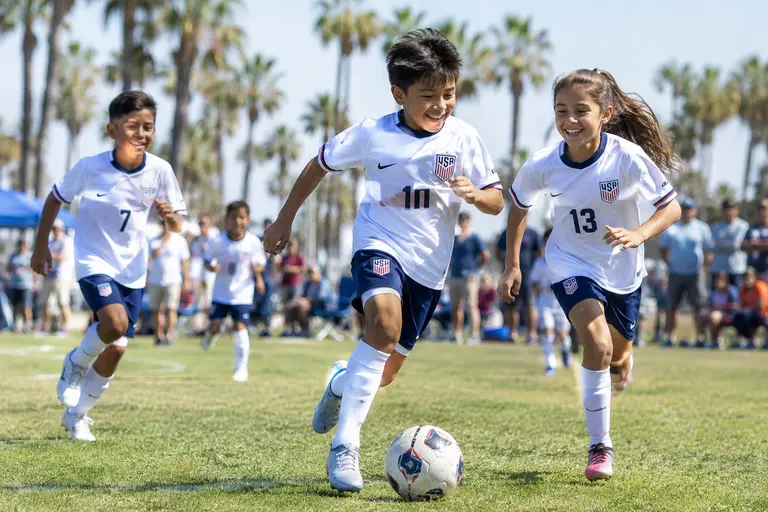
For local clubs, youth teams and community coaches, the benefit of senior international matches is exposure. Young players see the pace, spacing and body contact required at a higher level. Coaches can use the match as a teaching reference for pressing triggers, set-piece marking and the physical demands of international play. Related community sports coverage across the same network can be found at FS Golf, where local participation and facility access are part of the wider sports conversation.
Event Value Beyond The Score
The result will matter, but it should not be the only measure. A December friendly can help local soccer communities connect the national team to player development. If domestic-based players perform well, it supports the idea that MLS environments and U.S. academies can supply meaningful depth. If gaps appear, those gaps can inform coaching priorities at multiple levels.
From a club-management viewpoint, these matches can also reinforce the need for better player education around roles. Young athletes often focus on goals and assists, but national-team selection depends on broader reliability. Coaches at the grassroots level can use this type of match to show how off-ball movement, defensive recovery and decision speed influence trust.
USMNT Jamaica friendly Stakes
What Would Count As A Productive Match
A productive USMNT Jamaica friendly would not require a perfect performance. The more meaningful outcome would be clarity. The staff needs to identify which players can handle the speed of international decision-making, which combinations fit Pochettino’s structure and which roles still lack depth before the 2027 competitions arrive.
The game also offers a useful comparison point after the fall run. Wins over Peru, Chile, Mexico and Canada gave the U.S. positive momentum, but December’s roster conditions will be different. That contrast can help separate system strength from individual dependency. If a rotated group can still maintain pressing shape, protect central spaces and create chances, the staff gains confidence in the wider pool.
The Development Signal For 2027
The clearest stake is preparation. The Concacaf Nations League Finals, Gold Cup and 2030 World Cup qualifying cycle will test roster balance. The U.S. will need senior leaders, but it will also need players who can step in with little disruption. This match gives the staff one more chance in 2026 to judge that layer of the pool.
For supporters, the most useful way to read the match is through roles rather than only the scoreboard. Watch which players receive responsibility in buildup, who defends wide spaces, who takes set pieces and who communicates when the match becomes disjointed. Those signals may say more about 2027 selection than one attacking highlight. The USMNT Jamaica friendly is a friendly by label, but its strongest value is in the evidence it can give coaches before competitive matches return.