

Clovis High Football hired alumnus Brandon Nagle as head coach on February 3, 2026, replacing Aaron Wilkins after a season that ended in the Central Section final. Nagle brought a conference championship and a 27–8 record from his time at Clovis East. He inherited a program with a 10–3 benchmark and a documented example of quarterback development in Deagan Rose, who threw for more than 3,400 yards as a senior. Those figures establish where the program stood before the change, not how players improved after it. As of November 20, 2026, the evidence available for this review did not establish whether players progressed faster under Nagle.
What Clovis High Football Inherited
The Fresno Bee’s hiring report identified Nagle as a Clovis High alumnus and credited him with a Tri-River Athletic Conference championship during his 2022–24 head-coaching tenure at Clovis East. The 27–8 record covered three seasons at a different school, giving Clovis High a record of his experience leading a program. It did not identify which players improved most, how playing time was distributed or how much of the winning record came from returning production. Those are different questions from whether his teams won. The hiring record supports an assessment of Nagle’s program leadership, but not a forecast of individual growth.
ABC30 reported that Wilkins’s 2025 Clovis High team went 10–3 and reached the Central Section final, where it lost 70–35 to Central East. Central East was the opponent in that final; Clovis East was the school where Nagle previously coached. The result put two facts on the same record: the Cougars advanced to a section championship game, and they lost that game by 35 points. The margin alone does not explain whether the difference came from any particular phase of play or from a gap in player development. A review of the transition should preserve the full-season benchmark rather than use one result to define the team Nagle inherited.
A section finalist sets a different starting point from a program trying to become competitive. Nagle’s Clovis East record and Wilkins’s 2025 record both describe team success, but they cover different spans and different groups of players, so they cannot rank the coaches on development. Even matching the 10–3 record would not show whether younger players took on larger roles or whether returning starters improved their execution. The opposite is true as well: a weaker record would not by itself rule out progress at individual positions. The better comparison is what athletes could do at the start of a period versus what they could do by its end.
What Deagan Rose’s Production Showed
Sports Illustrated’s Central Section recruiting coverage profiled Rose, a Class of 2026 quarterback whose sophomore production included nearly 2,900 passing yards, 24 passing touchdowns and 14 rushing scores. By May 2024, he had drawn offers from schools that included Oregon, Auburn and Arizona. The passing and rushing figures show that his early production was not limited to one part of the offense. The offers show that college programs had taken notice well before he finished high school. They do not isolate the effect of a particular coach, and they are not a measure of whether the players behind him were progressing.
A Clovis High Football Quarterback Benchmark
Fresno State’s signing-day materials listed Rose at 213 completions on 322 attempts for 3,407 yards and 36 passing touchdowns as a senior in 2025. Compared with the sophomore figures, the senior totals show that his passing output grew in both yards and touchdowns. The sophomore figures cited here do not include attempts, however, so the two totals cannot establish whether his completion rate or yards per attempt improved. Nor do they show how much the change came from opportunity, offensive design or individual execution. For evaluating the staff transition, Rose’s senior line is a useful record of what the position produced before Nagle arrived.
Fresno State credited Rose with 11,448 career passing yards and 112 touchdown passes. The career figures capture his output across high school, but they include his senior season and should not be treated as a separate result confirming the same trend. They also set an unusually demanding comparison for a quarterback moving into a larger role: matching the departing starter’s volume is not the same as demonstrating progress. A review focused on coaching would ask whether that player became more consistent at identifying coverage and making decisions against pressure. The statistics supplied for Rose do not answer those questions for him or for his successors.
How to Measure Progress Under Nagle
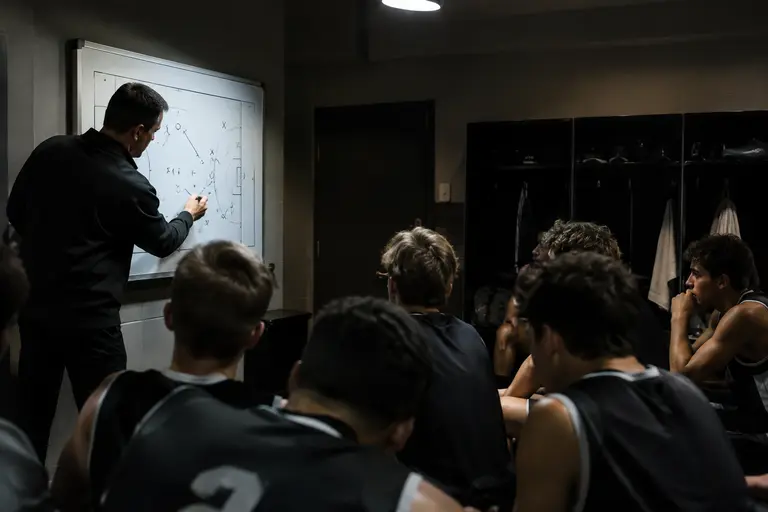
Clovis High Football can assess the transition by tracking the same players and assignments across the 2026 season rather than comparing one quarterback’s totals with another’s. For a returning offensive lineman, that could mean grading whether he identified the correct protection responsibility on comparable snaps early and late in the season. For a defensive back, it could mean reviewing alignment and coverage responsibilities against similar formations. Coaches would need to record the number of opportunities along with the grade, since a clean result on limited snaps carries less weight than repeated execution. These are proposed measures, not findings about Nagle’s staff.
Practice Reps and Game Responsibilities
For players competing for varsity roles, one useful measure would be the progression from practice repetitions to game assignments. A reserve asked to handle a regular rotation would have a different workload from a player used only in a narrow package, even if both appeared in the same number of games. Staff could record what each athlete was asked to do, review a sample of those snaps and identify which responsibilities expanded over time. Athletes who switched positions should be evaluated against the demands of their new roles rather than treated as if their assignments stayed fixed. This approach would give depth chart changes more meaning than an appearance count alone.
The staff review should also separate what coaches delivered from what players demonstrated. A position group might receive consistent instruction on a specific technique, but the development measure is whether athletes apply that technique in comparable game situations. Two coaches could review a sample of the same plays to check that they agree on what counts as correct execution before comparing grades across the season. If assignments or grading standards changed, the results should say so rather than combine unlike plays into a single number. Coverage on the related network site Sports Wire News offers a broader sports reading option; the evidence for this assessment would still have to come from Clovis High.
Player Pathways at Clovis High
The most useful community question is what the change meant for athletes who did not enter the program with Rose’s recruiting profile. Families evaluating a high school program have reason to ask how players receive feedback, which skills prepare them for a bigger role and how the staff communicates those expectations. A program might show that process by explaining the criteria for moving from a lower-level team into varsity practice or for earning a position rotation. It could share those criteria without publishing individual player grades. The record available for this review did not establish whether those pathways changed after the February 3, 2026, appointment.
For local youth coaches, a useful point of contact would be the high school staff’s expectations for athletes entering the program, not its college offer count. Coaches could ask which skills staff members want to see from beginners and which position decisions can wait until athletes have tried more than one role. That would give youth coaches and families specific information without asking them to treat early recruiting attention as the goal. A community review would need participation and retention figures to establish whether more athletes entered or stayed in the program. Neither Nagle’s Clovis East record nor Rose’s passing totals can answer that question.
Clovis High Football had a documented pre-hire benchmark: a 10–3 season, a section final appearance and a senior quarterback with 3,407 passing yards. Nagle’s Clovis East record explained why the school could evaluate him as an experienced head coach, but it did not supply evidence about the players he inherited. A stronger assessment of his impact would connect individual assignments, practice opportunities and game execution across the 2026 season, then check whether those gains extended beyond established starters. Until comparable player-level evidence is available, the hire can be evaluated on the record Nagle brought to Clovis High. Its effect on player development remained unverified as of November 20, 2026.