

CU Boulder Expectations for the fall 2026 season should be judged against a clear evidence base: the soccer team’s 2025 Sweet 16 run, volleyball’s 2025 NCAA Tournament Second Round appearance, preseason Big 12 positioning, and the roster or schedule details available before September 19, 2026. This assessment does not include unsupported claims about match results after that date. The better tournament question is not whether both teams should repeat peak outcomes automatically, but whether their structures support sustained performance through conference play and postseason selection pressure.
For Boulder-area clubs, youth coaches, and event organizers, the two programs create different planning signals. Soccer enters 2026 with a high returner count but a major goalkeeper transition. Volleyball carries a demanding early slate, a 40th anniversary program marker, and two preseason all-conference hitters. Each case affects how local athletes and clubs read the college pathway: not as a slogan, but through depth charts, schedule density, technical roles, and the standard required to compete in the Big 12.
CU Boulder Expectations For Fall 2026
CU Boulder Expectations And Baseline Data
The soccer baseline is unusually strong by program standards. In 2025, Colorado finished 17-4-3, including 8-1-2 in Big 12 play, and reached the Sweet 16 for the first time since 2013. That season ended on November 23, 2025, with a 2-1 loss to No. 9 Michigan State, as reported by Colorado Athletics. In tournament evaluation, that matters because knockout experience changes the internal reference point for returning players. The staff and squad have already worked through late-November preparation, travel rhythm, opponent scouting, and the pressure of single-elimination soccer.
In soccer, CU Boulder Expectations are also shaped by attacking production. The 2025 team set program records with 59 goals, 66 assists, and 184 total points, and finished unbeaten at home at 11-0-2, according to the University of Colorado Boulder Alumni Association’s recap of the Sweet 16 season. Those numbers support a high bar, but they should not be read as a guaranteed repeat. Goal output can vary with finishing form, set-piece conversion, opponent adjustments, and player availability. A safer expectation is that Colorado should have the personnel and confidence to compete near the top of the Big 12 if the chance creation profile remains strong.
Roster Continuity Versus Role Change
Colorado’s women’s soccer team returned 9 of 11 starters for 2026, with seniors Hope Leyba and Faith Leyba, forward Jace Holley, and midfielder Reagan Kotschau listed among the key returning players in the research. That continuity is meaningful for tournament preparation because repeat starters usually reduce the teaching load in team shape, pressing triggers, and late-game decision-making. Coaches can spend more time refining match plans instead of rebuilding basic partnerships.
The open goalkeeper competition is the main structural caveat. Jordan Nytes, an All-America selection and the 2025 Big 12 Goalkeeper of the Year in the research notes, graduated. The listed replacement group is junior Jamie Campbell, Texas Tech transfer Madeline Mueller, and freshman Brooke Goerish. Tournament specialists tend to treat goalkeeper succession as more than a personnel note. It affects back-line communication, set-piece marking, distribution choices, and the confidence of fullbacks asked to step higher in possession. If the new No. 1 settles early, Colorado’s returned field-player core has a cleaner path toward meeting preseason expectations. If the competition extends deeper into conference play, the margin for dropped points can narrow.
Soccer Baseline After The 2025 Sweet 16 Run
Conference Standing And National Reference Point
The Big 12 context puts a measurable ceiling on the discussion. In the 2026 Big 12 Preseason Coaches’ Poll, voted on August 3, 2026, Colorado was picked second among 16 teams, behind TCU. The research notes identify that as the program’s highest preseason Big 12 placement. One day later, on August 4, 2026, Colorado was ranked No. 13 in the United Soccer Coaches/IWSOC national preseason poll. These are not results, but they do show that coaches and national poll voters treated the 2025 run as transferable enough to affect 2026 projections.
From an event-organization perspective, a preseason No. 13 tag can change the feel of home dates. Opponents often prepare for Colorado as a ranked opponent rather than as a surprise postseason riser. Local club teams that attend college matches, schedule ball crew participation, or use college fixtures as teaching sessions can draw more useful lessons when a team is facing top-tier tactical resistance. The supported research does not quantify attendance effects or youth registration changes, so those outcomes should remain unclaimed. What can be said is that a ranked college team gives youth coaches a nearby example of spacing, tempo, defensive recovery, and substitution management under high expectations.
What Should Count As Meeting The Standard
A reasonable soccer standard should include three layers. First, Colorado should remain a top-half Big 12 team based on the second-place preseason poll position and returning starter base. Second, the team should be evaluated on whether chance creation and home control remain close to the 2025 profile, even if the record-setting goal totals come down. Third, postseason assessment should account for goalkeeper transition. A Sweet 16 repeat would be a strong outcome, but judging the season only against that endpoint would ignore how thin margins can be in NCAA soccer.
Volleyball Schedule Load And Big 12 Position
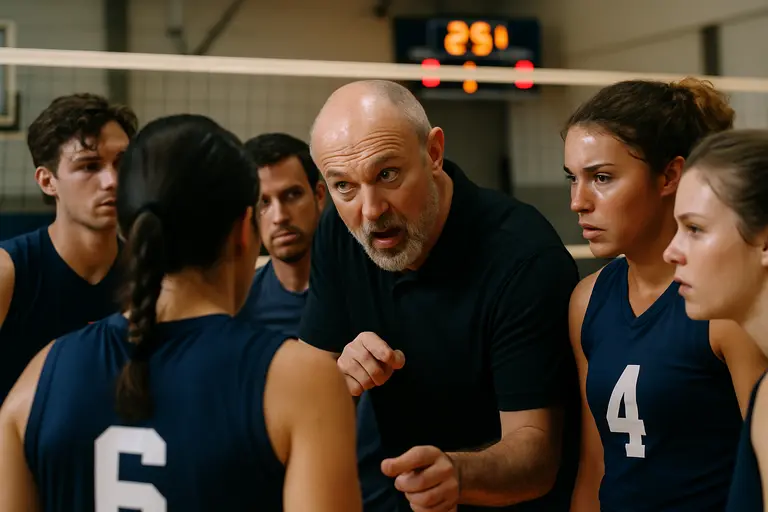
Anniversary Season With Competitive Weight
Volleyball widens CU Boulder Expectations because the program’s 40th anniversary year arrives after a 23-9 season in 2025. The research notes list a 12-6 Big 12 finish, a 13th 20-win season, the highest win total since 2017, and an NCAA Tournament Second Round appearance. Those facts put the 2026 team in a different category from a rebuild. The question is not basic credibility; it is whether the Buffs can handle the step from strong season to repeatable contender profile.
The 2026 Big 12 Volleyball Preseason Poll placed Colorado fifth, matching the highest preseason poll position in program history, last achieved in 2018 when the program was in the Pac-12. Senior hitters Ana Burilovic and Cayla Payne were named to the Big 12 Preseason Team. In volleyball terms, preseason recognition for two hitters matters because terminal attacking, serve-receive pressure, and late-set options often separate NCAA Tournament teams from middle-table conference sides. Still, preseason awards do not solve rotation balance by themselves. Passing consistency, setter connection, middle involvement, and defensive transition will shape whether the hitters see enough favorable swings.
Schedule Design And Tournament Readiness
Colorado unveiled its full 2026 volleyball schedule on June 3, 2026, according to the research notes. The team had 10 nonconference matches to begin the season, opened at home against Cal State Northridge on August 28, 2026, and had home tournaments plus road tests at USC and Colorado State before Big 12 play ran from late September through November. Because September 19, 2026, has already passed, the opener should be treated as a completed fixture rather than a future date; this article does not state the result because no verified result was provided in the research.
For tournament preparation, that schedule shape is useful. Home tournament settings can help staffs test rotations in controlled conditions, while road matches against USC and Colorado State ask a different question: can the team handle travel, crowd pressure, and opponent-specific serving plans before conference play? The Big 12 phase then compresses evaluation. A fifth-place preseason team needs enough early wins to protect postseason positioning, but it also needs measurable growth in the areas that travel into December volleyball: first contact, blocking discipline, error control, and late-set decision quality.
- Soccer benchmark: Colorado’s 2025 Sweet 16 run and second-place 2026 Big 12 preseason slot support high conference expectations.
- Soccer caution: The goalkeeper change after Jordan Nytes’ graduation is the clearest role transition.
- Volleyball benchmark: A 23-9 season in 2025 and fifth-place 2026 Big 12 preseason ranking place Colorado in the upper conference discussion.
- Volleyball caution: A schedule with early nonconference volume and road tests requires rotation clarity before late-September Big 12 play.
CU Boulder Expectations For Clubs And Youth Pathways
Local Club Lessons From College Standards
The strongest reading of CU Boulder Expectations for local clubs is developmental rather than promotional. Soccer shows the value of retaining a core, building attacking patterns over time, and preparing succession plans at specialist positions. Volleyball shows how established attackers still need system support through serve receive, transition defense, and schedule management. These are practical lessons for Boulder-area youth programs because they move the discussion beyond wins and toward repeatable training themes.
Event organizers can also read the two programs as case studies in calendar pressure. Soccer’s postseason reference point came from a late-November NCAA run in 2025. Volleyball’s 2026 schedule moved from an August 28 home opener into nonconference events and then Big 12 play from late September through November. Clubs planning tournaments, showcases, or college-exposure events can study that rhythm carefully: athlete readiness depends on recovery windows, match density, travel load, and the timing of evaluation opportunities. The research supplied here does not prove a direct rise in youth participation linked to either CU team, so that claim should not be made without registration data from clubs or governing bodies.
For those interested in how school programs connect with local clubs, a useful resource is Banat Zayed, which offers more insights on community-sport interplay within this network. The evidence available before September 19, 2026, supports guarded optimism for both CU programs. Soccer has the higher national preseason profile and the clearest continuity story, offset by a major goalkeeping change. Volleyball has the anniversary-year spotlight, two preseason all-conference hitters, and a schedule that should test NCAA Tournament readiness. For clubs and youth players, the useful lesson is clear: expectations are built less by slogans than by roster depth, role clarity, and the ability to repeat standards when the calendar tightens.