
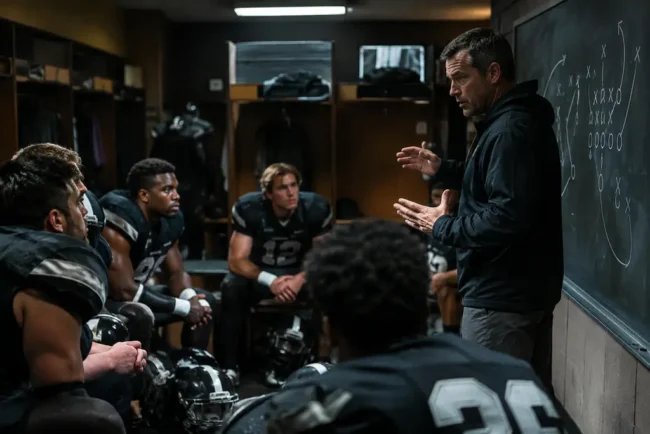
Pasadena Football had already lost the rest of its 2026 varsity schedule by the time Pasadena High School named Johnny Sanders head coach on November 19, 2026. The appointment gave the Bulldogs a successor to Ron Jones, but it could not restore the games students lost after the September 11 cancellation. That sequence matters: the school first faced a player-safety decision, then a coaching transition. For families, knowing who would lead the program answered one question without settling others about player development, eligibility or the loss of a senior season.
How the Pasadena Football Transition Unfolded
On September 11, 2026, Pasadena High School, through the Pasadena Unified School District, canceled the rest of the varsity season over player-safety concerns. The Bulldogs were 0–3 and had been outscored 133–14, including a 42–6 home loss to Norwalk on September 4, 2026. Those scores tell readers how the team fared on the field, not whether it could safely finish the schedule. The distinction matters because a losing record describes competitive performance; the district cited safety as the reason to stop varsity play.
Jones was dismissed on November 3, 2026, according to Yahoo Sports’ report on Jones. He had led Pasadena to the 2024 CIF Southern Section football championship, the Bulldogs’ first since 1933. That result belongs in any account of his tenure, but it is not a measure of how much varsity experience remained after the 2025 season. In the same way, the three losses in 2026 cannot tell readers how much of the roster shortfall was within any one coach’s control.
What Pasadena Football Confirmed in November
Mid Valley Sports reported Sanders’ appointment on November 19, 2026, 16 days after Jones was dismissed. The hire established who would lead varsity football, while leaving the district’s September decision as a separate matter. The sequence does not establish that the cancellation caused Jones’ dismissal or that naming Sanders resolved the conditions that had led the district to stop play. Treating those decisions separately keeps the focus on what each one actually changed for players.
For Pasadena Football, a named head coach gave families a clear point of contact for questions about the program’s direction. Students still needed different kinds of information depending on their circumstances: a returning player could ask how coaches would assess readiness, while a senior could ask what records were available from the games already played. Questions about school decisions required a separate answer from questions about football instruction. The appointment itself did not show whether those answers had reached families by November 21, 2026.
Roster Depth and Lost Development Time
Local reporting cited 21 seniors graduating after the 2025 season and 10 starters transferring out during the offseason, leaving many underclassmen in the program. Those counts describe different losses: one is a graduating class, and the other identifies players who had started. Neither figure gives the number of experienced replacements available at a particular position. That detail matters more to a coaching staff than a roster total alone, because having enough players to practice does not tell a coach how many are ready for varsity assignments.
Evaluating Readiness Beyond the Depth Chart
A useful coaching review would start with the assignments a student could handle, not just the open spots on a depth chart. A lineman might know a blocking assignment on a diagram but still need practice recognizing a different defensive front before the snap. A potential two-way player would need to learn separate responsibilities on offense and defense, not simply fill two vacancies. Those are examples of questions a staff could assess in practice, not claims about individual Pasadena players or drills Sanders had introduced.
Canceling the remaining games also cut off one way for coaches to judge whether practice work carried into competition. A player can show technique in a drill, but a game gives coaches a chance to see how that player responds when an opponent changes the picture or a play breaks down. The three games Pasadena completed offered a limited sample for that kind of review. Practice evaluations could still give returning students useful feedback, but they could not supply evidence from varsity games that were never played.
The distinction between roster size and readiness connects the Pasadena case to the planning questions in coaching strategies after record participation. Pasadena’s issue was the loss of experience, not a documented surge in participation. The common question is whether a program knows what its players are ready to do, rather than just how many are available. For a new staff, a practical starting point would be to record what each returning player had already learned and which assignments still needed work.
What Students and Families Lost
For Pasadena seniors, the games canceled on September 11, 2026, were lost opportunities to compete for their school in their final high school football season. A new head coach could not restore those dates, even if the appointment helped clarify plans for returning players. Students who wanted to show their varsity work had fewer games from which to draw examples than if the schedule had been completed. The reporting does not establish that any individual student lost a recruiting opportunity, so the clearest impact remains the loss of competition itself.
The cancellation also removed the 2026 Turkey Tussle, Pasadena High’s varsity rivalry game against John Muir High School. The rivalry had been played at the Rose Bowl since 1954, giving the loss a local significance that went beyond one fewer game on the schedule. For readers interested in further community sports coverage, our related site Texas Sportsmen offers an array of sports insights.
Families considering a transfer faced an eligibility question separate from the head-coaching hire. The California Interscholastic Federation allows hardship waivers when a school discontinues a program, but that provision is not proof that Pasadena’s cancellation automatically made a student eligible elsewhere. Ending a varsity schedule and establishing that an individual qualifies under a rule are distinct matters. The reporting does not identify any waiver decisions, and families would need a written determination for their own circumstances rather than relying on the cancellation announcement.
Measuring Student-Athlete Stability at Pasadena High
Pasadena High’s athletics administration had not changed uniformly before the football transition. The school’s 2024–25 reporting showed that the Athletic Director II position remained constant from 2021 through 2025, while Athletic Director I changed hands twice during that period. That record describes a mix of continuity and turnover, not a schoolwide leadership reset. It also does not establish who handled each football decision in 2026 or which responsibilities the athletic directors held during the coaching handoff.
Under Principal Eric Barba, the school sent parents an email about the varsity cancellation. That communication addressed the immediate decision, while a coaching handoff raises a different set of questions about whom families should contact. A useful follow-up would distinguish player-development questions for the coaching staff from eligibility questions that need a formal school or CIF answer. It could also state which activities had been confirmed and which decisions remained open, so an appointment notice was not mistaken for a full account of the program’s plans.
For Pasadena Football, the best evidence of stability would be answers players could act on. An underclassman should be able to find out which position skills coaches expect them to work on and how progress will be evaluated. A senior seeking documentation from the shortened season should know which school contact can help, while a family considering a transfer should know where to get an eligibility determination. These are standards for judging the handoff, not steps the reporting confirms Pasadena had completed.
As of November 21, 2026, the public record supported a narrower assessment than either the 2024 title or the 2026 results could offer on their own. Pasadena had appointed Sanders after a season cut short over safety concerns, but the hire did not demonstrate restored roster depth or settle individual eligibility cases. The next evidence to look for would be clear responsibilities, stated criteria for varsity readiness and consistent answers to families. Those measures would show whether students had gained continuity, not simply whether the school had filled the head-coaching position.