

U.S. Soccer Dates tell a more useful story when the matches are sorted by what was at stake. The men’s senior team’s fall fixtures offered Mauricio Pochettino room to evaluate players, while the November quarterfinal dates against Haiti carried a different demand: getting through a two-leg series. For the women’s senior team, the November 28, 2026, quarterfinal against El Salvador in Mansfield, Texas, has a direct reward for the winner: a place at the 2027 FIFA Women’s World Cup. The youth and futsal dates offer another perspective on development without requiring the same measures of success as a senior knockout match.
U.S. Soccer Dates From Friendlies to Knockouts
The U.S. Soccer fall schedule set four USMNT matches against Peru, Chile, Mexico and Canada from September 26 through October 6, 2026. It was the first set of matches under Pochettino’s new contract through 2030, which made it a useful starting point for assessing how he used the squad. The last two fixtures took the team to Glendale, Arizona, against Mexico on October 3 and to St. Paul, Minnesota, against Canada on October 6. For a coach reviewing that stretch, a useful question is whether players could carry out the same assignments across games or whether changes in personnel called for simpler instructions. The schedule establishes the opportunity to test those ideas, not which ideas worked.
U.S. Soccer Dates and the Pressure of a Second Leg
The Concacaf Nations League quarterfinal against Haiti shifted the focus from evaluation to advancement. The first leg was scheduled for November 14, 2026, in Miami, Florida, and the return leg was scheduled for November 17 at TQL Stadium in Cincinnati, Ohio. A three-day gap limits the time between matches for reviewing what happened and rehearsing changes, while the first-leg score can alter the risk a team needs to take in the second. An analyst with both match records could assess a substitution or a late change in shape against the series score at that moment. The results are not verified here, so neither advancement nor the success of any tactical adjustment is treated as established.
The March 25, 2027, entry for a Nations League semifinal against Mexico at SoFi Stadium should be read in that context. The date and venue are listed, but without a verified quarterfinal outcome, the U.S. matchup should be treated as conditional rather than a confirmed rematch. The October meeting in Glendale is a useful reference point for the pairing, not a basis for predicting how a semifinal would unfold. A coach can afford to leave an experiment in place for longer in a friendly than in a knockout game where the score demands a change. That distinction matters more for development analysis than the fact that the opponent listed is the same.
World Cup Qualification Starts in Mansfield
The remaining U.S. Soccer Dates on the women’s senior calendar separate a direct qualification test from a later camp evaluation. The USWNT is scheduled to face El Salvador on November 28, 2026, at Texas Health Mansfield Stadium in the Concacaf W Championship quarterfinals. The winner earns a 2027 FIFA Women’s World Cup berth in that match, rather than having to wait for the title game. That gives the Mansfield fixture significance in its own right, independent of how the rest of the bracket unfolds. For a local youth team following the match, the useful discussion is how players handle decisions under qualification pressure, rather than how many new faces get minutes.
| Date | Fixture or Camp | Location | What the Date Establishes |
|---|---|---|---|
| November 28, 2026 | USWNT vs. El Salvador, W Championship quarterfinal | Texas Health Mansfield Stadium, Mansfield | Winner qualifies for the 2027 Women’s World Cup |
| December 5, 2026 | Concacaf W Championship final | Shell Energy Stadium, Houston | Decides the regional title; finalists are not assumed here |
| January 5–12, 2027 | USWNT camp, ending with a January 12 match against Panama | Carson; match at Dignity Health Sports Park | Training block followed by a match |
The December 5, 2026, final at Shell Energy Stadium in Houston has a separate purpose: deciding the Concacaf W Championship title. The Mansfield quarterfinal has a direct World Cup consequence even if the U.S. does not reach Houston. That distinction gives supporters in the two Texas communities different reasons to follow the bracket, without making either match a proxy for the other. It also changes the questions a coach might pose to young players watching: what does a team do to protect a qualifying position, and what changes when the immediate prize is a trophy? Those are questions about match decisions, not predictions about the finalists.
The January 5–12, 2027, camp in Carson, California, offers a different setting for evaluation. The USWNT’s match against Panama on January 12 at Dignity Health Sports Park gives the staff a match at the end of a defined training block. The week provides room to introduce players or rehearse responsibilities before seeing how those assignments hold up against an opponent. That is an opportunity the calendar creates, not evidence of a particular call-up, starting lineup or amount of playing time. For a club coach comparing Carson with Mansfield, the useful distinction is whether a match is being used to assess a role or whether the result itself secures qualification.
Youth Tournament Play and Futsal Camp
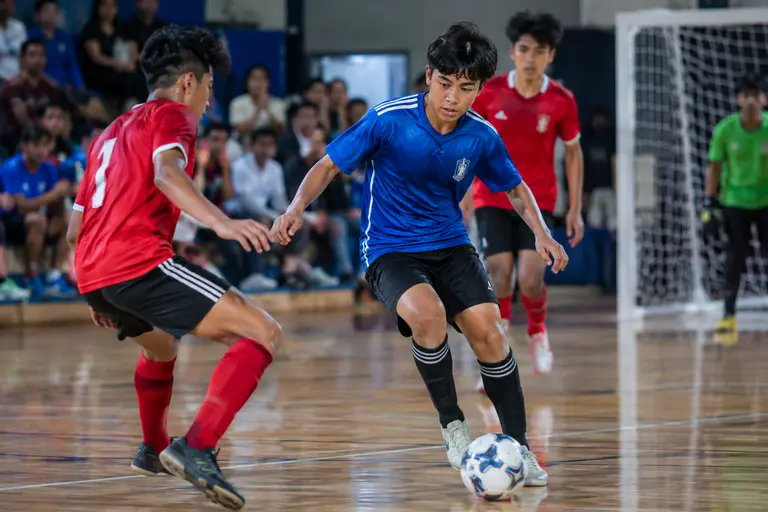
The U.S. U-17 Men’s National Team’s World Cup schedule in Qatar makes short-turnaround decisions a central part of the group stage. The 2026 tournament was scheduled from November 19 to December 13, with the U.S. drawn in Group J. Its group schedule listed Montenegro for November 21, Chile for November 24 and Algeria for November 27, each separated by three days. That spacing gives coaches a concrete way to discuss how much instruction players can absorb between games and how changing the lineup might affect the next match. The November 21 result is not verified here, and the tournament’s closing date does not imply that the U.S. will play through it.
What Club Coaches Can Take From Group J
A youth coach following Group J can ask players to track one responsibility across the scheduled opponents instead of making an assessment from goals alone. For example, a group can watch what a midfielder does before receiving the ball, then discuss whether the same choice makes sense when the available space changes. That keeps the discussion focused on what the player saw and did rather than on a projection about a future senior call-up. It also offers a way to talk about rotation without assuming that a different lineup reflects a change in a player’s standing. Three scheduled group games offer a framework for that comparison, but they cannot establish an individual’s long-term ceiling.
The U.S. Men’s Futsal National Team’s November 3–8, 2026, training camp offered a contrast with the U-17 tournament. The calendar identified a camp rather than a group schedule, so there was no published sequence of tournament opponents in the supplied information against which to judge progress. For a club program, the more practical connection is a training question: how quickly does a player recognize a passing option when space is limited? A coach can build that question into a small-sided session without claiming that the national futsal camp used the same exercise. The dates give futsal a place in the national-team discussion without establishing who attended or whether anyone moved between programs.
Local Club and Fan Engagement Around U.S. Soccer Dates
The December 13, 2026, USMNT match against Jamaica in Fort Lauderdale, Florida, is listed at Inter Miami CF Stadium. As the closing men’s senior fixture on the 2026 schedule, the Jamaica friendly offers a chance to assess depth without the two-leg constraints of the Haiti quarterfinal. A useful postmatch review would record who was asked to cover a specific role, what that role demanded and whether the assignment changed with the score. Minutes alone would not show whether two players faced the same task. Before the match, the date tells supporters where the team is scheduled to play, not which players will get that opportunity.
For local clubs, one practical use of the calendar is to pair one fixture with one activity rather than asking families to follow every national-team program. A Texas club could use the Mansfield quarterfinal for a discussion about decision-making under pressure, while a Florida club could use Jamaica to explain why coaches test squad depth. A group unable to attend can still use the matchup as the basis for a short team discussion. Attendance, participation and local spending are not established by the fixture list, so host-city visibility should not be reported as measured impact. Triple T Powersports provides more information on related sporting events as it’s part of the same publishing network.
Clubs that want to assess their own outreach can separate participation from match interest. For a Mansfield discussion, a coach could record which age groups took part and whether players could explain why the quarterfinal mattered for qualification. For a Fort Lauderdale session built around Jamaica, the club could ask players to identify a role they saw and describe one decision that role required. These are ways to assess a club activity, not measures of stadium turnout or national-team progress. The calendar gives each community a specific match to work with, while the value of the activity depends on what local coaches and players can take back to training.