
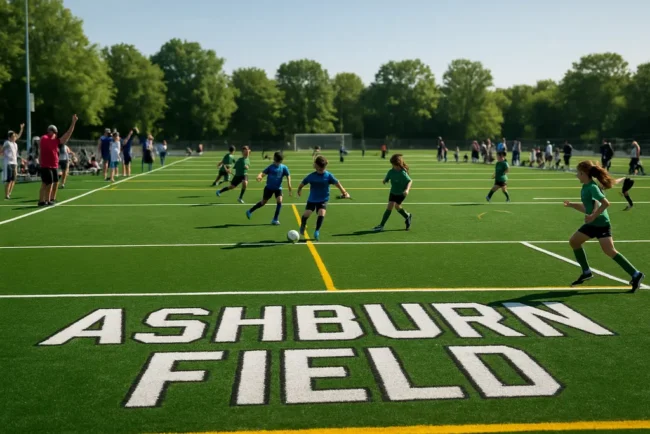
Ashburn Field Renovations at FDR Park gave Philadelphia youth baseball a more reliable home on July 10, 2026, when Major League Baseball and Phillies Charities, Inc. formally unveiled the rebuilt complex. The project should be assessed on two tracks: whether the new surface reduces weather disruption for players, and whether public-facing oversight keeps pace with facility investment.
What Ashburn Field Renovations Changed
Facility Scope And Timing
The renovation centered on Ashburn Field, a five-acre baseball complex in South Philadelphia’s FDR Park. On July 10, 2026, MLB and Phillies Charities, Inc. held a ribbon-cutting ceremony to mark completion of the work. The field was renovated with a high-performance synthetic turf system and upgraded drainage, and the ceremony led into the Opening Ceremony for the All-Star Commissioner’s Cup. The first official game on the new surface featured the Phillies Urban Youth Academy against the Cincinnati Reds Youth Academy, according to the official MLB account.
The timing was not incidental. The work formed part of MLB and Phillies Charities’ broader commitment of more than $5.5 million to legacy and community projects in Philadelphia ahead of the 2026 All-Star Game. For a youth venue, that framing matters because All-Star-linked capital can either produce short-lived event polish or leave behind practical assets. In this case, the central asset was not a new spectator feature. It was a playing surface intended to absorb heavy use.
Ashburn Field Renovations And Weather Risk
The Ashburn Field Renovations shifted the facility from grass to synthetic turf while addressing drainage across the complex. Before the work, Ashburn Field hosted about 125 events annually, and nearly 30% were canceled because of weather issues tied to the grass surface and poor drainage. Those figures make the access problem concrete. A canceled practice or game is not only a lost date on a calendar; it can interrupt coaching cycles, reduce repetitions, and make participation less predictable for families.
The new artificial surface was designed to respond to high groundwater and frequent rain delays. That does not guarantee perfect scheduling, especially in a public park setting where field demand, maintenance windows, and weather extremes still matter. But it does set up a measurable test. If cancellations fall across comparable program periods after July 10, 2026, the renovation will have done more than improve appearance. It will have increased dependable playing time.
Youth Access Gains And Program Capacity
Participation Footprint
Ashburn Field is expected to serve about 8,000 participants through Phillies RBI and Youth Academy programs. That scale places the project in a different category from a single-team field upgrade. A venue serving thousands of young athletes must be evaluated as community sports infrastructure, with questions about program reach, scheduling equity, transportation access, safety, coaching quality, and affordability.
The field’s original build also gives the site a longer baseball development arc. Ashburn Field was built in 1998 using funds from the 1996 MLB All-Star Game. It later received upgrades in 2015, including bleachers, a scoreboard, and a press box. The 2026 work is therefore not the first investment in the site, but it appears more directly tied to participation reliability than earlier spectator and operations improvements.
Why Reliability Matters
The value of Ashburn Field Renovations will be clearest if the new surface lets youth programs plan with fewer weather-related losses. Baseball development depends on repetition: defensive work, batting practice, pitcher-catcher routines, and situational drills. When nearly one-third of events are lost, the effect is not evenly distributed. Families with fewer backup options may feel those cancellations more sharply than travel teams with access to private cages or suburban facilities.
That is why facility quality should be paired with access policy. A renovated field can widen opportunity only if program slots are usable, affordable, and distributed in ways that reach local players. Similar issues are examined in a related My All Time Best analysis of community sports facilities and youth access, where new construction is treated as one part of a wider participation system.
Governance Questions Around The Turf Work
Permit Issue Raised In August
The project also drew scrutiny after completion. In August 2026, The Philadelphia Inquirer reported that the Phillies installed artificial turf at Ashburn Field in July without final approval of a required Pennsylvania Department of Environmental Protection permit tied to erosion control and stormwater discharge, according to the Inquirer report. That issue does not erase the access case for the field, but it does change the facility analysis.
Sports venues in public spaces carry obligations beyond playability. Drainage and stormwater systems affect park conditions, surrounding soil, and public confidence in the project. Because the renovation specifically aimed to solve water-related field losses, the permit question sits at the center of the facility story rather than at its edge.
What Oversight Means For Community Venues
The available information supports a cautious read. The work was completed and unveiled on July 10, 2026. The permit concern became public in August 2026. As of September 9, 2026, the research record provided here does not include a verified final regulatory outcome, post-renovation cancellation rate, or long-term maintenance report. Those gaps are not reasons to dismiss the project. They are reasons to separate confirmed improvements from outcomes that still need documentation.
For a public youth sports asset, strong governance is part of access. If families, coaches, and city partners are asked to trust that a renovated surface will serve thousands of players, the project’s environmental and maintenance paperwork should be clear. Facility investment earns durability when the playing benefits and the approval process can both withstand review.
Facility Lessons For Urban Baseball

Legacy Funding And All-Star Timing
The Ashburn Field case shows how major-event funding can be directed toward neighborhood sports use. All-Star Games often bring short-term attention, but the more useful civic question is what remains after the event calendar passes. In Philadelphia, MLB and Phillies Charities connected part of the 2026 All-Star platform to a field that already had youth baseball roots dating to 1998.
That continuity matters. Building a new venue can attract headlines, but improving a known youth baseball site can reduce friction for existing programs. Coaches know the location. Families have some familiarity with the park. Program administrators can compare pre- and post-renovation conditions. Those factors make Ashburn Field a useful test case for weather-resilient youth baseball infrastructure in a dense city setting.
Access Metrics To Track
The stronger test will come through public or program-level data after the field has operated through wet periods and heavy youth schedules. The following indicators would help determine whether the project meets its access promise:
- Cancellation rate: Compare post-renovation weather losses with the prior figure of nearly 30%.
- Program reach: Track whether the facility consistently serves the expected 8,000 participants.
- Schedule quality: Review whether younger players and local programs receive usable time slots.
- Maintenance performance: Monitor turf condition, drainage function, and repair needs over multiple seasons.
- Regulatory clarity: Confirm permit status and stormwater compliance through official records.
Readers comparing venue investment across sports can find related sports coverage at My All Time Best, though Ashburn Field’s central question remains local: whether a rebuilt baseball surface produces more consistent access for Philadelphia youth programs.
Ashburn Field Renovations And Youth Access
A Measured Read On The Project
The renovation has a strong access rationale. The old field lost a large share of events to weather, while the new surface and drainage were built to reduce that disruption. The facility also sits within established Phillies RBI and Youth Academy programming, giving it a direct participation pathway rather than leaving community use vague.
The stronger case for Ashburn Field Renovations will depend on evidence gathered after the ribbon-cutting. Reduced cancellations, stable maintenance, transparent permitting, and fair program scheduling would support the claim that the project improved youth baseball access. Without those follow-up measures, the renovation remains a promising facility upgrade with an unresolved oversight question. For Philadelphia youth sports, the field’s real value will be measured less by its July 2026 unveiling and more by how many playable days it reliably protects in the seasons that follow.