
College Coaching Grading has become less about a single hire announcement and more about whether a program can connect staff fit, player development, recruiting structure, and short-cycle performance evidence. By September 8, 2026, several Power-4 football and high-major basketball moves had already given athletic departments and supporters enough information to judge process, even if full win-loss results still needed more time.
That distinction matters for community-facing programs as much as national brands. A coordinator change can alter how high school coaches view scheme fit. A head coach departure can affect roster trust. A veteran assistant can stabilize a room, but only if the staff builds clear teaching standards. For clubs, academies, and school programs, the same grading logic applies at a smaller scale: hire for role clarity, judge by measurable player progress, and avoid treating reputation as proof of current effectiveness.
College Coaching Grading And Staff Fit
College Coaching Grading At Coordinator Level
College Coaching Grading at coordinator level should start with the problem the hire was meant to solve. ESPN tracked notable Power-4 coordinator changes for the 2026 college football season, including Virginia Tech rehiring Brent Pry as defensive coordinator under new head coach James Franklin after Pry had been fired as head coach earlier in 2025. Pry had previously worked with Franklin at Penn State, where the staff produced a Big Ten title and multiple College Football Playoff top-12 finishes, according to ESPN’s coordinator tracker.
That case is useful because it separates head-coaching evaluation from assistant-coaching evaluation. A coach can struggle in one leadership seat and still have a credible profile for a narrower technical role. For Virginia Tech, the early grade was not about nostalgia. It was about whether Franklin and Pry had enough shared language to shorten installation time and build defensive accountability without role confusion.
Syracuse offered a more data-led example. ESPN reported that the Orange hired Vince Kehres as defensive coordinator after Toledo finished fourth nationally in fewest points allowed at 13.3 per game and second in fewest yards allowed at 254.3 per game in 2025. Syracuse had allowed 419 points in 2025, the most in the ACC. That makes the grading frame clearer: the hire addressed a documented defensive weakness with a coach coming off measurable success.
Why Scheme Fit Is Not Enough
Scheme fit helps explain why a staff move makes sense, but it should not carry the full grade. A college coordinator must teach college-age players, recruit to the system, communicate with position coaches, and make week-to-week adjustments. Grassroots coaches know this pattern well. A system that works with one roster can fail if teaching progressions are unclear or if players do not understand their roles.
The stronger grading method is to pair production data with context. Toledo’s defensive numbers under Kehres were strong, but Syracuse still had to translate that approach into ACC personnel and weekly opponent demands. Pry’s prior work with Franklin at Penn State showed a shared working background, but Virginia Tech still had to show whether that trust improved practice standards and game-day communication.
Offensive Resets At North Carolina And Clemson
Veteran Play-Callers And Immediate Teaching Demands
North Carolina and Clemson showed how offensive hires can be graded against recent production. Under Bill Belichick, North Carolina averaged 19.3 points per game in 2025, and the program hired Bobby Petrino as offensive coordinator in February 2026. ESPN reported that Petrino’s recent campaigns included ranking sixth nationally in yards per game and 30th in scoring. The short-term question was direct: could a veteran play-caller raise efficiency without asking players to learn too much too quickly?
Clemson’s move carried a different type of reference point. Dabo Swinney rehired Chad Morris as offensive coordinator in 2026. Morris had held the same role from 2011 through 2014, when Clemson ranked 15th nationally in scoring at 36.4 points per game. That past success gave the hire a clear identity, but College Coaching Grading should be cautious with return hires. A previous fit is relevant, not decisive. Player skill sets, defensive trends, and roster-building tools change across coaching cycles.
For local coaches and club managers, these examples reinforce a practical lesson. An offensive reset should be judged by the teaching load placed on athletes. If terminology, formations, and reads change at once, the staff needs a plan for reducing errors. If the system is familiar, the grade should still ask whether the program has enough pace, spacing, and player-specific development to improve production.
- Problem definition: The best hires are linked to a documented weakness, such as Syracuse’s points allowed or North Carolina’s scoring level.
- Role clarity: A former head coach returning as a coordinator needs clear authority lines and a defined technical brief.
- Teaching evidence: Practice structure, error reduction, and player confidence should shape the first evaluation window.
- Recruiting connection: Staff changes affect how prospects and high school coaches understand scheme opportunity.
Basketball Movement And Continuity Risk
Dusty May And The Cost Of Elite Success
Basketball coaching movement added another layer to the grading discussion. On June 22, 2026, AP reported that the Dallas Mavericks were hiring Dusty May away from Michigan after May led the Wolverines to their first NCAA men’s basketball title since 1989 with a 34-3 record in 2025-26, according to AP’s report. That development showed that a college program can win at the highest level and still face immediate continuity risk.
For an athletic department, that type of loss changes the grading scale. The question is not whether the coach succeeded; the record and championship answer that. The next grade belongs to the program’s succession planning, staff retention, roster communication, and ability to protect player development routines after a high-profile exit.
This is where community engagement becomes more than public relations. When a program has strong relationships with alumni, local coaches, youth clubs, and campus supporters, it can reduce uncertainty during leadership change. Those relationships do not replace elite coaching, but they can keep trust intact while a new staff explains its standards. The same idea appears in high school and local competition, where coaching turnover can shift competitive balance; a related local example is this analysis of Class 4A coaching changes.
Community Lessons From Power-4 Staff Changes
What Smaller Programs Can Borrow
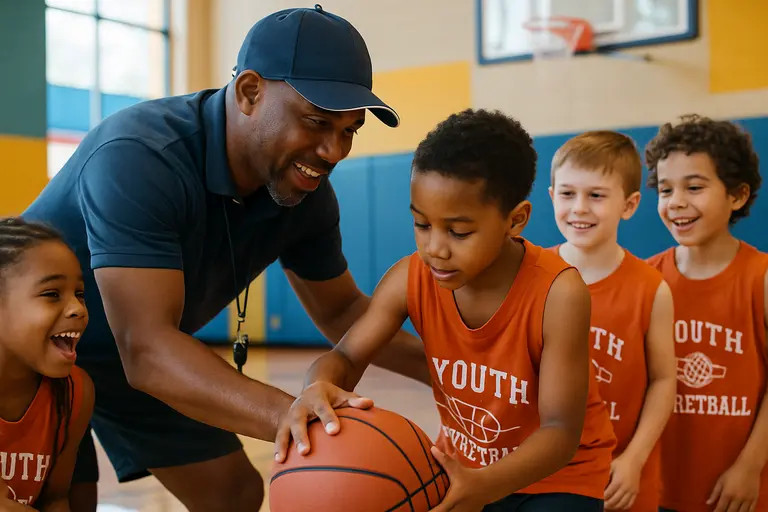
Power-4 programs operate with larger budgets and higher visibility, but their staff decisions offer useful lessons for school teams, academies, and community clubs. The first lesson is to grade the process before the public result. Did the club identify a clear weakness? Did it hire a coach with evidence that matches the need? Did players receive a clear transition plan?
The second lesson is to protect development pathways during staff turnover. Young athletes need consistent feedback and stable expectations. A new coordinator or head coach can bring needed energy, but the program should avoid shifting standards so often that players cannot measure progress. Community clubs can use written role profiles, shared practice plans, and coach education sessions to reduce that risk.
Sports networks also show how coaching analysis can cross disciplines. If readers are interested in understanding how club operations across sports might share themes, they should visit FS Golf. The same questions about coaching access, player pathways, and member engagement can apply in a different setting.
What College Coaching Grading Measures Now
What College Coaching Grading measures now is a wider set of signals: staff fit, production evidence, teaching clarity, roster trust, and community connection. The examples from Virginia Tech, Syracuse, North Carolina, Clemson, and Michigan show that no single grade can rest on name value alone. A familiar coach can be the right hire, but the proof still has to come through role execution.
The most useful grading standard is cautious and evidence-led. Early marks can assess whether a hire matched an identifiable need. Later marks should assess player development, scheme consistency, and competitive results. For Power-4 programs, that means judging whether staff changes improved the team. For grassroots programs, it means asking whether athletes received better coaching, clearer roles, and a stronger reason to stay involved.