
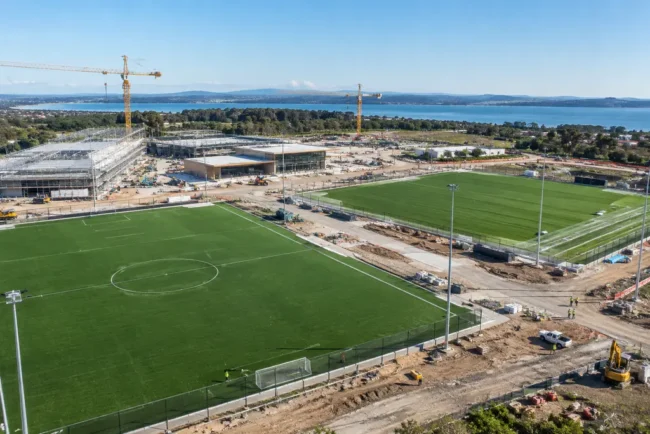
The proposed North Shore Sports Village in Brown Deer remained in the review stage as of November 10, 2026, with no construction start or confirmed opening date announced. The project matters for youth sports because it combines indoor ice, court sports, futsal and turf space with a hotel and commercial program, but its sports value will depend on approval, financing, scheduling and user costs. Milwaukee-based Cobalt Partners presented the revised design to the Brown Deer Village Board in early November 2026, and the project name, revised plan and $3.2 million land purchase were reported in local coverage.
North Shore Sports Village Plan And Site
The proposal centers on a roughly 16-acre site along North Arbon Drive, just south of West Brown Deer Road in northern Milwaukee County, according to a project report that reported the site location. That location is notable because it places the project in the northern suburbs of Milwaukee, where youth teams often balance school gyms, private club rentals, older ice schedules and travel to regional tournament venues.
North Shore Sports Village Components
The planned indoor program has been described at about 250,000 square feet. The sports mix includes two ice hockey rinks, courts for basketball, volleyball and futsal, plus a turf field. The surrounding development plan also includes a 100-room hotel and 15,000 to 20,000 square feet of commercial space. For youth sports operations, that mix points to a hybrid model: daily practice rentals, local league play, weekend tournaments, camps and possibly sport-specific training sessions.
The pairing of rinks, courts and turf is significant. Ice sheets can anchor hockey and skating use across long seasonal blocks, while courts can rotate between volleyball, basketball and futsal through shorter booking windows. Turf adds soccer, lacrosse, football training and general conditioning capacity. The operational challenge is that these uses do not all draw the same customers, season lengths or staffing needs. A rink-heavy schedule can run differently from a court tournament schedule, and that affects parking, concessions, locker rooms and traffic flows.
| Facility Element | Reported Plan | Key Sports Question |
|---|---|---|
| Ice | Two hockey rinks | Can youth teams get reliable practice slots at accessible hours? |
| Courts | Basketball, volleyball and futsal | Will scheduling serve both clubs and local recreation programs? |
| Turf | Indoor field space | Can field sports reduce winter travel for training? |
| Hospitality | 100-room hotel | Will tournament traffic support the business case without displacing local access? |
Cost And Approval Status
The project was first proposed in July 2025. Early descriptions placed the complex near $50 million, while later project reporting in the research record placed the possible total between $80 million and $120 million. That change is central to the facility debate because youth sports buildings are capital-heavy before they host a single game. Ice plants, turf systems, court surfacing, mechanical systems and parking all carry long-term costs beyond construction.
As of November 10, 2026, final approval from the Brown Deer Village Board had not been reported, and construction had not started. That status should keep analysis grounded. The proposal is not a finished venue, and no team, league or family can treat the opening date as fixed. The next public steps matter because they will clarify design scope, financing exposure, phasing and operating commitments.
What It Could Change For Youth Access
If North Shore Sports Village is approved and built, the strongest youth sports argument is not novelty; it is indoor time. In northern climates, winter access often shapes player development. A family with a 20-minute trip to a training slot has a different weekly burden than a family crossing a metro area after school. Shorter travel can help younger athletes stay in programs, especially when siblings, schoolwork and parent work schedules compete for time.
Indoor Time And Multi-Sport Scheduling
Indoor capacity can reduce the strain on school gyms and older municipal spaces, but it can also be captured by the highest-paying users. That is why the operating model matters as much as the building plan. A facility with two rinks and multiple courts can widen participation if it reserves usable hours for local recreation, entry-level clinics and school partnerships. It can narrow access if prime evening slots are priced only for select teams and travel clubs.
This is a familiar test in facility planning. New buildings often attract attention at the design stage, but the sports outcome depends on pricing, coaching pathways, transportation and safety. Our prior analysis of youth access planning makes the same point: construction is only one part of participation. The schedule after opening can decide whether a venue functions as a community asset or mainly as a tournament rental platform.
Affordability And Program Control
Affordability should be tracked before any ceremonial first shovel. Ice hockey is already equipment-intensive. Club volleyball and travel basketball can also involve fees, uniforms, tournament charges and travel costs. A new complex could lower travel time while still leaving total participation costs high. Public officials and residents may want clear information on expected rental rates, local resident access policies and any reserved blocks for Brown Deer recreation programs.
Program control is another issue. If outside tournament operators dominate weekends and elite clubs dominate weeknights, local youth may see limited benefit. If the village, schools, nonprofits and operators set aside predictable time for beginner sessions and community leagues, the same building could support a broader athlete base. The proposal has been framed as a regional destination, but regional demand should not crowd out the youth users nearest to the site.
Sports Tourism And Brown Deer Economics
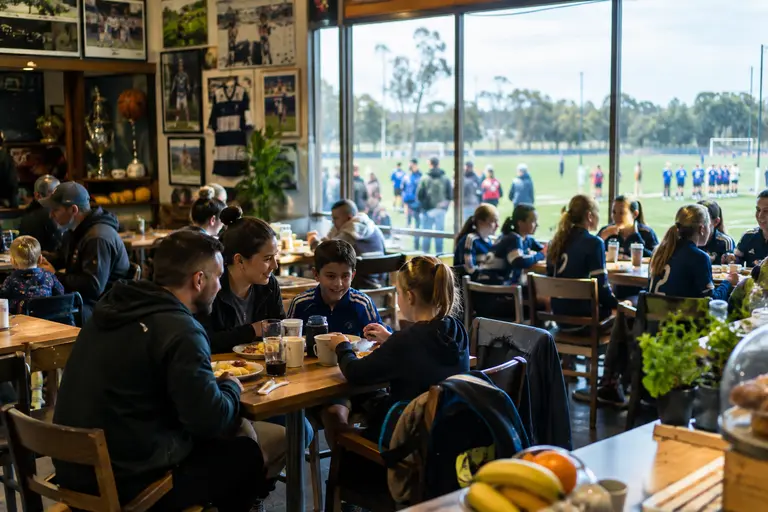
The development plan links sports participation with visitor spending. The proposed hotel and commercial space suggest a tournament-driven model in which teams, parents and coaches stay near the venue, eat locally and spend around weekend events. That model is common in youth sports travel, but it is not automatic. Tournament calendars must be strong, repeatable and coordinated across sports to fill rooms and support retail activity.
Hotel And Retail Assumptions
A 100-room hotel can make sense if the facility becomes a steady host for hockey, volleyball, futsal and turf events. It can also carry risk if the event calendar is uneven or if families choose lower-cost lodging elsewhere. The commercial space, reported at 15,000 to 20,000 square feet, may benefit from daily users as well as weekend visitors. Food service, sports medicine, training, equipment and casual retail could all fit a sports district model, but tenant demand would need to match actual foot traffic.
For Brown Deer, the economic question is not whether sports visitors spend money. Many do. The question is how much of that activity would be new to the community, how much public support would be required, and how quickly taxable value could cover public obligations tied to the site. Readers comparing community sports development across markets may also find related local sport coverage at AP Levante, a related site in the same network.
Public Finance Questions
The research record says public funding tools under discussion include a tax incremental financing district, state or federal grants, sponsorships, naming rights and possible phasing. Each tool carries a different risk profile. Grants and sponsorships can reduce local exposure if secured. Naming rights depend on market interest. Phasing can limit upfront cost, but it may also delay the full sports program that makes the venue attractive to tournaments.
Tax incremental financing deserves close review because it uses future property tax growth within a defined district to pay eligible project costs. That can support infrastructure if the development performs as projected. It can also create pressure if assessed value, occupancy or commercial activity falls short. For a youth sports facility, public finance review should connect directly to public benefits: resident access, recreation partnerships, job creation, traffic management and long-term maintenance obligations.
North Shore Sports Village Decision Points
The proposal is best judged through specific decision points rather than broad optimism or rejection. First, the village needs a clear final site plan showing circulation, parking, emergency access and neighborhood impacts. Second, the financing structure should separate private development risk from public obligations. Third, the operator should define how local youth programs can use the building during prime hours, not only leftover daytime blocks.
Measures That Should Be Public
Several measures would help residents assess the sports case: projected annual visits by sport, expected local versus nonlocal use, hourly rental assumptions, reserved community time, scholarship or low-cost programming, tournament calendar targets, traffic estimates and public cost exposure. None of these figures alone would settle the issue, but together they would show whether the project is likely to expand participation or mainly serve travel-team commerce.
For North Shore Sports Village, the central facility test is straightforward: can a large indoor complex balance regional sports tourism with dependable local access? The project has a site, a developer, a name and a revised concept. It does not yet have final approval, a construction start or a confirmed opening date. Until those details are settled, the strongest analysis remains conditional: the venue could fill a real indoor sports gap in northern Milwaukee County, but its youth sports impact will depend on policy choices made before the doors ever open.