
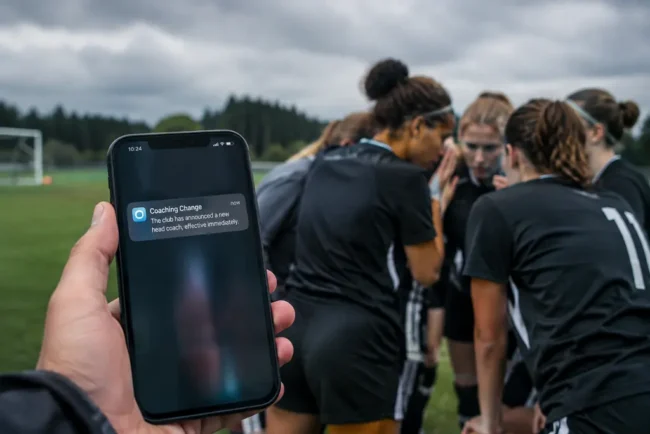
The Maryland coaching change on October 21, 2026, was not a routine midseason adjustment. Maryland and Michael Locksley mutually agreed to part ways, and Aazaar Abdul-Rahim was named interim head coach the same day, according to Maryland Athletics. For a college football staff, that kind of timing affects far more than the title on the office door. It changes meeting rhythms, practice messaging, player accountability channels, and the way a roster processes pressure during a conference schedule.
As of November 11, 2026, the safest analysis is grounded in the verified record rather than claims about private locker-room reactions. Public information confirms the date of the move, the interim appointment, and the performance context that preceded the decision. What remains less certain is how individual players responded behind closed doors. That distinction matters for fair coaching analysis, especially in a program where leadership, player development, and community trust are closely linked.
Maryland Coaching Change Timeline
Decision Date And Immediate Structure
The leadership shift happened on October 21, 2026. Maryland announced that Locksley and the university had mutually agreed to end his tenure, with Abdul-Rahim stepping in as interim head coach. The immediate naming of an interim leader reduced one source of operational confusion: players and staff knew who was leading the program after the announcement. That does not remove the emotional impact of a head coach leaving, but it gives a roster a defined chain of command.
In midseason coaching changes, the first team-dynamics issue is usually clarity. Players need to know who runs practice, who handles position-group priorities, who makes game-week personnel calls, and which messages from the previous staff remain active. Abdul-Rahim’s appointment gave Maryland a point person for those decisions. The public record does not confirm every staff-duty adjustment, so any deeper claim about internal meeting structure would be unsupported.
Record Context Behind The Move
The competitive record explains why the Maryland coaching change moved from discussion to action. CBS Baltimore reported that Locksley was 38-49 at Maryland, including 16-47 in Big Ten play, and that the team was 2-5 in 2026 with an 0-4 Big Ten mark at the time of his departure, according to CBS Baltimore. The same report noted that Maryland had lost five straight games, with the run capped by a 37-30 home loss to Rutgers on October 16, 2026, after Maryland gave up a 10-point halftime lead.
For team dynamics, those numbers matter because repeated conference losses can strain belief in the weekly plan. A single defeat can be framed as execution. A five-game losing streak, paired with a winless Big Ten start, puts stress on the relationship between coaching messages and player buy-in. That does not mean players stopped competing. It means the program’s evidence base for continuity had weakened by late October.
Team Dynamics Under Interim Leadership
Player Roles And Practice Messaging
The first task for an interim coach is not to redesign an entire program in one week. It is to stabilize roles. Players who were starters before the move still need a consistent view of expectations. Reserves need to know whether evaluation standards have changed. Younger players need to see whether development periods, special-teams work, and position meetings still carry the same weight.
That is where Abdul-Rahim’s communication likely became central, though public sources do not provide verified player-by-player reactions. A cautious reading is that the interim period required Maryland to balance two needs: preserving enough continuity for game preparation while creating enough change to justify the decision. If the message leaned too heavily on continuity, players could question why the move happened. If it leaned too heavily on change, preparation could become scattered.
Defensive Stress And Offensive Rhythm
The Rutgers result on October 16 is especially relevant because Maryland led by 10 points at halftime before losing 37-30. Without adding unsupported technical claims, that scoreline still points to a game-management and second-half execution problem. For players, those moments can reshape trust. Offensive units may feel pressure to extend leads. Defensive units may feel public scrutiny after late-game points allowed. Special teams and field position can also become part of the weekly accountability review.
The Maryland coaching change therefore sat at the intersection of performance and psychology. A roster does not process standings in isolation. It processes film sessions, depth-chart feedback, media attention, fan response, and the daily tone of coaches. In a community-facing program, those pressures extend outward to recruits, families, former players, donors, and local youth coaches who watch how the university handles adversity.
- Short-term clarity: The interim appointment gave the team one public leader after October 21, 2026.
- Conference pressure: The 0-4 Big Ten start made league performance the central performance issue.
- Player development: Younger players needed continued teaching even as staff leadership changed.
- Community trust: Stability matters to families, recruits, and local football programs that track Maryland’s direction.
For readers comparing staff moves across major programs, Power-4 staff evaluation offers a related lens on how schools weigh fit, production, and continuity. Broader community sports coverage across the same network can also be found at Back2Tap’s site for matching performance with program strategies, though Maryland-specific claims here are limited to the verified reports cited above.
Maryland Coaching Change And Team Dynamics

Why The Human Layer Matters
The Maryland coaching change should be read as both a football decision and a team-culture event. Locksley’s record, the 2-5 start, the 0-4 Big Ten mark, and the Rutgers loss provide the measurable context. The human layer is harder to measure but still central to coaching. Players recruited by one head coach must now respond to another voice. Assistants must align their messaging. Position groups must maintain practice standards without letting uncertainty weaken effort.
From a grassroots coaching perspective, the lesson is not that every losing streak demands a staff change. The lesson is that leadership credibility is built through repeated evidence. Athletes at any level respond best when coaching points match what they see in games. If the same problems keep appearing, the staff must either correct them or explain the plan with enough clarity that players stay committed.
The Maryland coaching change also shows why midseason transitions are rarely clean. They can offer a reset in tone, but they do not erase the schedule, the record, or the habits built over months. Abdul-Rahim’s interim period gave Maryland a defined leader after October 21, 2026. The deeper test was whether the roster could convert that clarity into sharper preparation, steadier game management, and stronger belief during Big Ten play.
For now, the evidence supports a measured view: Maryland made a leadership move after a documented slide in results, not after a single poor weekend. The public data shows why pressure built. The next stage of analysis should rely on verified game outcomes, official staff updates, and on-record player or coach comments rather than assumptions about morale. That is the fairest way to assess how the Maryland coaching change affected the team’s structure, confidence, and long-term football direction.