
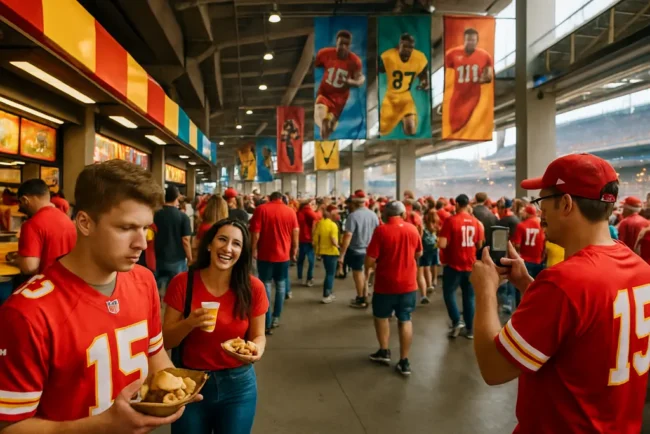
Stadium Amenities have moved from background operations to a front-office priority for pro clubs. The pattern across recent venue projects is clear: teams are trying to reduce waiting, widen food choices, improve premium spaces, and make buildings easier to use before, during, and after games. For fans, that changes how much of the event is spent watching the field rather than standing in a line. For clubs, the same upgrades affect revenue, retention, and the chance to host larger events beyond the regular schedule.
Why Stadium Amenities Now Drive Club Strategy
Modern game day planning is no longer limited to the scoreboard, the seating bowl, or the team store. Clubs are treating concourses, concession points, restrooms, signage, and club spaces as performance systems. That framing matters because the fan experience is shaped by small delays. A slow entry gate can affect the first inning. A crowded restroom bank can cost a fan a key possession. A hard-to-find food stand can turn a short break into a missed scoring chance.
The current wave of Stadium Amenities is partly about convenience, but it is also about control of crowd flow. More self-service options, clearer directional signs, and more distributed food locations can spread fans across the building instead of concentrating them in a few pressure points. The available research does not prove that every upgrade produces a measurable satisfaction gain, but the investments show that teams see operational friction as a competitive issue.
Stadium Amenities And Time Saved
The most practical question is simple: does the upgrade give fans time back? Grab-and-go markets, frictionless checkout, added point-of-sale locations, and better signage all target the same problem. In sports terms, they protect live viewing time. That is especially important in baseball, hockey, basketball, and football, where short sequences can define a game. A fan who misses a three-run inning, a power play, or a red-zone series because of a concession delay may remember the building as much as the result.
From an equipment perspective, these upgrades resemble performance gear for the venue itself. Checkout units, scanners, menu boards, refrigeration, handheld payment devices, and wayfinding systems are not glamorous, but they influence pace and access. Teams that install them well can make the building feel easier to read. Teams that add hardware without solving layout pressure may see less benefit.
Concessions, Checkout, And Queue Control
Food and beverage upgrades are the clearest shared theme across recent projects. The Cincinnati Reds introduced a Food Hub grab-and-go marketplace in the Fan Zone at Great American Ball Park for the 2026 season, added two soft-serve ice-cream stands, and expanded food, beverage, and retail options with faster self-service checkouts, according to the club’s MLB announcement. That is a useful case because it combines menu expansion with speed, rather than treating new food items as the only improvement.
Other teams used a similar logic in different formats. The Philadelphia Phillies added new food experiences at Citizens Bank Park for 2026, including a shared home-plate location pairing Freddy’s Frozen Custard & Steakburgers with Chickie’s & Pete’s, the GHOST® Energy Deck, souvenir carafe cocktails, and player-inspired menu items tied to charity. The Denver Broncos added 11 new food vendors for the 2026 NFL season at Empower Field, with nine identified as local vendors, plus more than 120 new menu items and beer vending machines. Those details point to two aims: variety and transaction speed.
Baseball’s Food-Service Test Case
Baseball gives teams more innings and more natural pauses, but that does not make food service easy. A ballpark crowd can surge between innings, during pitching changes, or after a long half-inning. The Reds’ 2026 changes at Great American Ball Park fit that operating model because grab-and-go service can absorb short bursts of demand. Fans who study ballpark culture beyond the box score may also find useful context at a related site in the same network, Books on Baseball, especially because baseball venues often reveal how tradition and operations meet inside the same building.
The caution is that more options do not automatically mean better access. Placement matters. If a new market sits in a high-traffic pocket without enough entry and exit space, the line can still block movement. If self-checkout systems are unfamiliar to fans, staff support can decide whether the system feels faster or more confusing. The best fan-facing food upgrades pair new concepts with layout planning and clear instructions.
Premium Spaces Without Losing The Main Bowl
Premium seating and club areas are also being redesigned, but the broader trend is not only about luxury. It is about segmenting demand. If suite guests, club-seat holders, families, and general-admission fans have better-matched spaces, the pressure on shared concourses can ease. That can help the full building, not just the highest-priced sections.
The Cincinnati Bengals completed Phase One of Paycor Stadium renovations for the 2026 season. The work included renovated restrooms, upgraded concessions, transformed club lounges and suites, a redesigned Pro Shop, a modern scoreboard control room, more than 1,000 new and more accessible signs throughout the stadium, and core infrastructure improvements. The detail that stands out is signage. It is easy to focus on food, scoreboards, or clubs, but wayfinding is a basic access tool. More accessible signage can reduce uncertainty for families, visiting fans, and spectators with mobility or sensory needs.
Club Seats, Suites, And Restrooms
Restrooms rarely headline a renovation, yet they are one of the most direct measures of comfort. The Baltimore Ravens’ M&T Bank Stadium renovation included upper-level concourse expansion and an increase in upper-level restrooms by about 30 percent, along with other changes reported in the research. That kind of work does not change the playbook on the field, but it can change how long fans remain in their seats and how they rate the building after a close game.
Premium lounges and suites carry business value, especially for season-ticket packages and corporate hosting. Still, teams need to protect the main-bowl experience. A stadium can look upgraded on a sales brochure and still frustrate regular fans if concourses, restrooms, and concessions lag behind. The most balanced projects treat premium work and general-access work as connected, not separate.
| Team Or Venue | Reported Fan-Facing Change | Primary Experience Target |
|---|---|---|
| Cincinnati Reds, Great American Ball Park | Food Hub, added soft-serve stands, expanded options, faster self-service checkouts | Shorter food waits and more choice |
| Cincinnati Bengals, Paycor Stadium | Restrooms, concessions, club spaces, Pro Shop, control room, signage, infrastructure | Comfort, navigation, and building function |
| Denver Broncos, Empower Field | New vendors, more menu items, beer vending machines | Local variety and faster beverage access |
| Tennessee Titans, New Nissan Stadium | Planned Just Walk Out technology in more than 40 concession locations when the stadium opens in 2027 | Frictionless concessions |
How Clubs Measure Fan-Centric Stadium Amenities
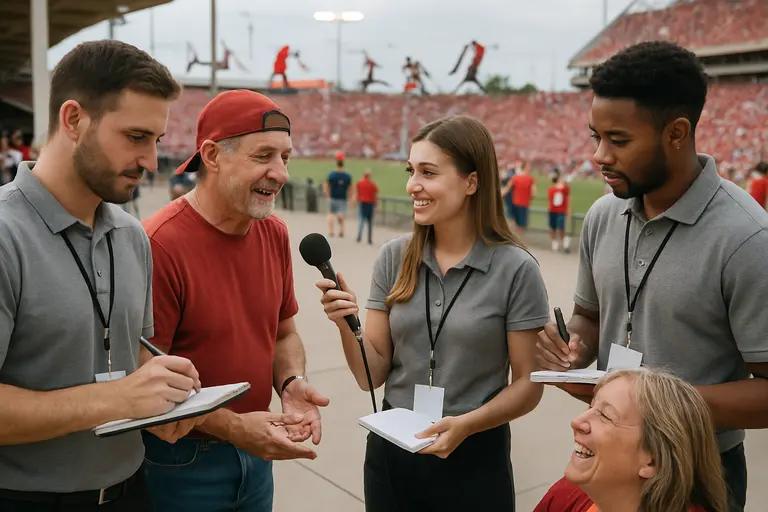
The clearest measurement problem is that fan comfort is not one number. Teams can track sales, transaction speed, entry scans, survey scores, app usage, and renewal rates, but those signals need context. A new concession system might increase transactions while still frustrating fans if the pickup zone clogs. A premium club might generate revenue while leaving upper-deck circulation unchanged.
That is why the most useful evaluations look at the whole fan path. Entry, seating, food, restrooms, retail, exits, and accessibility all connect. The Tennessee Titans’ planned new Nissan Stadium, scheduled to open in 2027, is a high-profile example because research notes say it will use Amazon’s Just Walk Out technology in all 40-plus concession locations. If delivered as described, the venue would test whether fully frictionless concessions can work across an NFL building rather than in a few isolated stands.
Access, Youth Fans, And Community Use
Fan-centric projects should also be judged by who benefits. A family with young children may value restroom access and clear signs more than an exclusive lounge. A youth team attending a game together may care about affordable food choices, safe concourse movement, and easy meeting points. That connection between venue design and participation is also relevant outside pro sports; related analysis of community sports facilities shows how access, pricing, safety, and scheduling influence youth engagement.
- Operational speed: checkout time, scanner capacity, and line movement shape how much game action fans see.
- Physical comfort: restrooms, concourse width, and seating access influence whether fans move freely.
- Choice and identity: local vendors and team-specific menu items can make a venue feel less generic.
- Accessibility: signage, route clarity, and service placement matter for fans with varied needs.
Stadium Amenities As Competitive Infrastructure
The Carolina Panthers announced on July 23, 2026, a Bank of America Stadium renovation with a total cost of $1.3 billion, aimed at fan experience and hosting major events, with work expected to be completed by 2030, according to the NFL report. The project includes amenity-related features such as a music venue and corridor improvements. That type of long-range plan shows how clubs now view the building as an event platform, not only a home-field container.
The next test for Stadium Amenities is execution. Fans can see whether a restroom line is shorter, whether a checkout lane is intuitive, and whether signs reduce confusion. Teams can announce large projects, but the competitive value comes from repeatable, game-by-game reliability. A good venue upgrade should make the sport easier to follow in person: fewer missed plays, clearer movement, better access, and less stress between the gate and the seat.
For pro clubs, the lesson is measured rather than flashy. Food variety helps, but only if fans can reach it. Premium spaces help, but only if basic circulation holds. Digital systems help, but only if staff and layout support them. The strongest stadium plans treat fan time as a limited resource. Protecting that time may be the most practical standard for judging the next generation of game day improvements.